



Introduction to Peptide-Drug Conjugates (PDCs) and DMPK Research Strategies
-

Articles
-

Aug 13, 2026
Traditional chemotherapy drugs, such as paclitaxel and doxorubicin, still play an important role in cancer treatment, and have achieved significant therapeutic effects, but the side effects are also obvious. The reason is that chemotherapy unspecifically poisons tumor cells and normal cells. As early as 1913, German scientist Paul Ehrlich proposed a "biological bullet" - if toxic drugs were installed on carriers specifically targeting tumor cells, it would be possible to kill tumor cells accurately without harming normal cells. In 2000, the first ADC went on the market, which marked the successful implementation of the concept of the "biological bullet". So far, the total number of ADC approved by the FDA has reached more than ten. Although the treatment of ADC continues to make progress, there are still some problems with these treatments. For example, the complex structure of ADC leads to high production costs; With a long half-life in the circulatory system, ADCs are prone to exert systemic toxicity. In view of this, peptide-drug conjugates (PDCs) have emerged, which consist of a homing peptide, linker, and payload (Figure 1). PDC takes advantage of the high affinity of the homing peptide with tumor surface receptors to deliver a payload to the target.
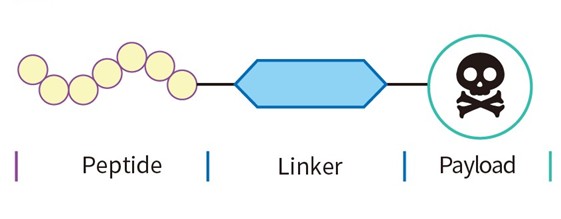
Figure 1. Structure of PDC
Understanding PDC Structure and Payloads
Payloads of PDCs Include the Following Types:
Cytotoxic drugs, such as paclitaxel, and gemcitabine.
Radionuclides, which have been used for accurate diagnosis of diseases and targeted radiotherapy of tumors. Radioisotopes used for diagnosis include fluorine -18(18F), copper -64(64Cu), gallium -68(68Ga) and iodine -123(123I). These radioisotopes are coupled with targeted peptides, and by combining them with targeted receptors on tumor cells, the positron released by radioisotopes can be detected to accurately locate malignant tissues. When the targeted peptide is linked to radionuclides such as indium -111(111In), yttrium -90(90Y), and lutetium -177(177Lu), the PDC is used as a targeted radiotherapy drug.
Other types include proteins, peptides [2], nucleic acids, and PROTAC[3].
PDC vs ADC: What Are the Advantages of PDC
PDC shares the same advantages as ADC. To some extent, PDC overcomes some shortcomings of ADC. As shown in Table 1, compared with ADC, PDC has a smaller molecular weight, better tissue penetration, and lower or no immunogenicity. Compared with the complicated chemistry, manufacture, and control (CMC) process of ADC, PDC is easier to synthesize, purify, and characterize, and the cost is much lower. In recent years, with the application of cyclization technology, phage display technology, and mRNA display technology in the screening of targeted peptides, the development of PDC has been accelerated. PDC is expected to become the next generation of targeted drugs after small molecules, antibody, and ADC.
Table 1. Comparison of PDC with Chemotherapy and ADC
Item | Chemotherapy | ADC | PDC |
CMC Cost | Low | High | Low |
PK | Widely distributed, prone to resistance | Long half-life in circulation, poor tissue penetration | Short half-life in circulation, good tissue penetration |
Targeting | None | Good | Moderate to good |
Immunogenicity | None | Yes | No or low |
Overview of Approved Peptide-Drug Conjugates and Clinical Pipelines
At present, a variety of PDCs are in the clinical stage, and selected examples are listed in Table 2. The approved peptide-drug conjugates are summarized in Table 3.
Table 2. Selected PDCs in Clinical Stages
PDC | Company | Stage | Target | Indication |
AEZS-108 (Zoptarelin doxorubicin) | Aeterna Zentaris, Sinopharm | Phase III | GnRH | Endometrial carcinoma |
SNG1005/ANG1005 | Shenogen Pharma, Angiochem | Phase III | LRP-1 | Brain metastatic NSCLC, breast cancer, and recurrent glioma |
BT1718 | Bicycle Therapeutics | Phase Ⅰ/Ⅱ | MMP14 | Esophageal carcinoma, NSCLC |
BT5528 | Bicycle Therapeutics | Phase Ⅰ/Ⅱ | EphA2 | Solid tumor |
BT8009 | Bicycle Therapeutics | Phase Ⅰ/Ⅱ | Nectin-4 | Esophageal carcinoma, NSCLC |
PEN-221 | Tarveda Therapeutics | Phase Ⅰ/Ⅱ | SSTR | NSCLC, neuroendocrine tumor |
CBX-12 | Cybrexa Therapeutics | Phase Ⅰ/Ⅱ | TOPO1 | Solid tumor |
EP-100 | Esperance Pharmaceuticals | Phase Ⅱ | GnRH | Ovarian cancer |
TH1902 | Thera Technologies | Phase Ⅰ | SORT1 | Triple-negative breast cancer |
CBP-1008 | Coherent Biopharma | Phase Ⅰ | FRα, TRPV6 | Solid tumor |
*Withdrawn in Oct. 2021.
Table 3. Approved peptide-drug conjugates
PDC | Approval time | Company | Target | Payload | Indication |
68Ga-DOTATATE | Jun. 2016 | Advanced Accelerator Applications S.A/Novartis | SSTR | 68Ga | Diagnosis of Neuroendocrine tumor |
177Lu-dotatate | Jan. 2018 | Advanced Accelerator Applications S.A/ Novartis | SSTR | 177Lu | Gastrointestinal pancreatic neuroendocrine tumor |
68Ga-DOTATOC | Aug. 2019 | Advanced Accelerator Applications S.A/ Novartis | SSTR | 68Ga | Diagnosis of Neuroendocrine tumor |
64Cu-dotatate | Sep. 2020 | RadioMedix | SSTR | 64Cu | Diagnosis of neuroendocrine tumors |
Pepaxto | Feb. 2021* | Oncopeptides | aminopeptidase | Melflufen | Multiple myeloma |
TLX591-CDx | Dec. 2021 | Telix Pharmaceuticals | PSMA | 68Ga | Diagnosis of prostate cancer |
Understanding PDC Pharmacokinetics
Absorption
Compared with traditional small molecules, PDC has a relatively large molecular weight and the permeability is not so superior. Due to the instability in the gastrointestinal tract, PDCs on the market and in the clinical stage are administered by intravenous injection as of 2024, which does not involve the absorption process.
The obstacle of PDC is its poor stability in vivo and short half-life. Peptides can be rapidly degraded by proteases and easily cleared in the kidneys. In the treatment of solid tumors, it is necessary to prolong the circulation of PDC so that PDC can fully penetrate tumor tissue. At present, modification of peptides is an important strategy to enhance stability and prolong half-life [1].
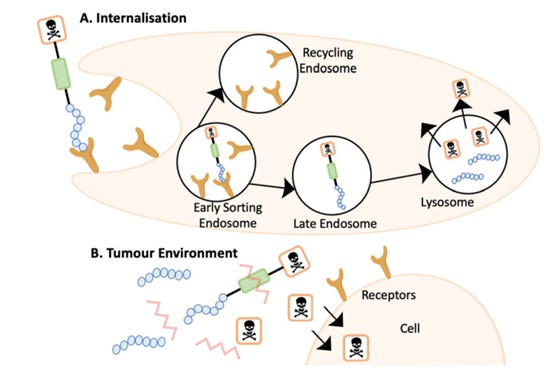
Figure 2. Targeting mode of PDC to tumor [1]
Distribution
The peptides of PDCs are divided into two categories: Cell-Targeting Peptides (CTPs) and Cell Penetrating Peptides (CPPs). Cell-penetrating peptides are not used as homing peptides of PDC because of their poor specificity to cells. There are two approaches for PDC to target tumors.
PDC binds to the receptor, is endocytosed into the cells, captured by lysosomes, and releases toxins.
PDC releases toxins when it reaches the tumor environment, and the toxins enter the tumor cells to kill the tumor cells (Figure 2).
Metabolism
There are three main metabolic pathways for PDCs in vivo [4].
The first one is the target-mediated drug disposition (TMDD) approach which is specific. PDC binds to the receptor on the target cells followed by endocytosis into the cells, and then is degraded into peptide and amino acid in lysosomes. However, the number of receptors on the cell surface is usually limited, so TMDD could be saturated and result in a nonlinear pharmacokinetic profile.
The second one is the non-specific metabolic pathway. Non-target mediated and non-specific metabolic processes, such as proteases hydrolysis and non-specific endocytosis, lead to the release of small molecular cytotoxins to untargeted tissues and exert off-target side effects.
The third one is the formation of anti-drug antibodies, which will be removed by the immune system. It is generally believed that the immunogenicity or anti-drug antibody reaction found in preclinical animals cannot predict the anti-drug antibody reaction in humans.
Excretion
The molecular weight of a PDC is less than the filtration threshold of the glomerulus (60 kDa), so it is easy to be quickly cleared by the kidney, which makes it impossible for cytotoxins to accumulate effectively in tumors.
Renal excretion may be the main clearance route of PDCs in vivo. In this case, in vivo clearance is equal to the glomerular filtration rate (fu * GFR) of PDCs without considering renal tubular reabsorption and active secretion [5].
What Are the PDC Development Challenges
Despite the extensive experiences that have been accumulated for ADC, the research and development of PDC is not regarded to be smooth. The opportunities and challenges coexist for PDC. Compared with ADC, the tissue specificity and tumor targeting of peptides are inferior for PDC, which brings great challenges to the screening of targeted peptides. At the same time, due to the poor gastrointestinal stability of peptides, oral administration has increased the difficulty. PDC also has potential difficulties related to bioanalysis and potential off-target effects.
Comprehensive DMPK Strategy for PDCs
In essence, PDC uses a targeting strategy to deliver drugs, which share the properties of both peptide and small molecules. The stability and targeting of PDC are relatively poor compared to ADC, so special attention should be paid to the toxicity of the payload. Table 4 summarizes the DMPK strategy for PDC.
Table 4. DMPK Strategy for PDC*
DMPK | Screening | PCC | IND-enabling |
In vitro | Metabolic stability and MID of homing peptide and PDC in whole blood, plasma, and renal homogenate in vitro Stability of PDC in cathepsin (or lysosome, acid buffer, or glutathione (GSH)) (depending on the type of linker) Blood/plasma ratio of payload PPB and tissue protein binding of PDC and payload | MID in tumor cells Stability and MID in kidney/liver homogenate or S9 | PPB of PDC Stability in plasma and kidney homogenate of PDC and the corresponding MID studies CYP inhibition, induction, and transport inhibition of PDC In vitro ADME studies for payload |
In vivo | MID of peptide and PDC in plasma and urine from in vivo studies PK of peptide PK and tissue distribution of PDC | Non-rodent PK of PDC Tissue distribution of PDC in PD models | Bioanalytical method qualification of PDC and payload ADA method qualification Dose linearity In vitro MID Tissue distribution and mass balance |
* Applicable when the payload is a cytotoxic drug.
In the screening stage, the main content of DMPK research is to improve the stability of the homing peptide and PDC in whole blood, plasma, and kidney homogenate, and continue to optimize the structure of PDC through MID in vitro and in vivo. According to the different types of linkers (non-cleavable or cleavable; if cleavable, refer to cleavage mode), a suitable in vitro model is selected to evaluate the release of the payload. It is suggested to carry out a tissue distribution study in rodents with PDC in the early stage of the project to evaluate the potential toxicity of the payload in different organs.
In the preclinical candidate (PCC) stage, a suitable in vitro model is recommended to evaluate the release of the payload and the metabolism of the PDC. It is necessary to simultaneously detect the concentration of PDC and payload in plasma. In the case of repeated administration, it is recommended to monitor anti-drug antibodies. A tissue distribution study could be performed in pharmacodynamics (PD)-relevant species to evaluate the targeting of PDC.
In the IND-enabling stage, if the payload is brand-new, a comprehensive in vitro evaluation of the payload is needed. It is suggested that radiolabeled PDC be used to study the tissue distribution and mass balance in rodents.
Desired Capabilities for PDCs
Plasma protein binding of PDC
The molecular weight of PDC is generally large with potential nonspecific binding, so the commonly used equilibrium dialysis may not be suitable. Plasma protein binding of PDC can be carried out with ultracentrifugation method or combined with plasma dilution if needed.
PDC Bioanalysis
PDCs suffer from stability and non-specific binding issues during bioanalysis. Other issues, such as multi-charge state, low sensitivity, low extraction recovery, and endogenous interference bring more challenges to the bioanalysis of PDC.
For some PDCs with cleavable linkers, it is suggested that the plasma from in vivo PK should be precipitated immediately as precautions after collection to get supernatant, because these PDCs may have stability issues in plasma.
In addition, due to the high toxicity of payload, it is generally required that the concentration in normal tissues be kept at a very low level. This brings about higher requirements for the lower detection limit of payload, and it will be great to reach the level of pg/mL. As high-sensitivity mass spectrometry was set up, combined with the rich experience of homogenate of various tissues, the detection limit of payload can be further lowered.
Bioanalysis of immunogenicity
The NMPA requests immunogenicity testing for peptides or their conjugates, so the immunogenicity of PDCs should be evaluated [6]. MSD® electrochemiluminescence (MSD® ECL) can be used to determine the ADA of PDCs, including screening tests, confirmation tests, and titer tests.
MID of PDC
For evaluating the release of the PDC payload, different in vitro models could be used, such as liver S9, lysosomes, plasma, whole blood, and tumor cells. In vivo models include healthy animals, tumor-bearing animals, and so on. In these models, the identification of PDC metabolites can be carried out to evaluate the payload release of the PDC (Figure 3).

Figure 3. PDC-related instruments for bioanalysis[8]
Summary
The design of PDCs combines the advantages of targeted peptides and different types of drugs. In recent years, with the regulatory approval of radionuclide therapy and radionuclide diagnosis drugs [7], the advantages of these drugs have been proven. The clinical pipelines also show encouraging results. With the coupling of various molecular entities and targeted peptides, the future of PDCs is promising.
Authors: Qigan Cheng, Liping Ma, Jing Jin
Talk to a WuXi AppTec expert today to get the support you need to achieve your drug development goals.
Committed to accelerating drug discovery and development, we offer a full range of discovery screening, preclinical development, clinical drug metabolism, and pharmacokinetic (DMPK) platforms and services. With research facilities in the United States (New Jersey) and China (Shanghai, Suzhou, Nanjing, and Nantong), 1,000+ scientists, and over fifteen years of experience in Investigational New Drug (IND) application, our DMPK team at WuXi AppTec are serving 1,600+ global clients, and have successfully supported 1,800+ IND applications.
Reference
[1] Cooper B M, Iegre J, O'Donovan D H, et al. Peptides as a platform for targeted therapeutics for cancer: Peptide–drug conjugates (PDCs)[J]. Chemical Society Reviews, 2021, 50(3): 1480-1494.
[2] Hurov K, Lahdenranta J, Upadhyaya P, et al. BT7480, a novel fully synthetic Bicycle tumor-targeted immune cell agonist™ (Bicycle TICA™) induces tumor-localized CD137 agonism. J Immunother Cancer. 2021 Nov;9(11):e002883.
[3] Jin J, Wu Y, Chen J, et al. The peptide PROTAC modality: a novel strategy for targeted protein ubiquitination[J]. Theranostics, 2020, 10(22): 10141-10153.
[4] Haoze Z, Zilong S, Hanmei X. Recent progress in pharmacokinetic analysis of protein and peptide drugs[J]. Progress in Pharmaceutical Sciences, 2017, 41(08): 592-599.
[5] Jobin J, Bonjour J P. Measurement of glomerular filtration rate in conscious unrestrained rats with inulin infused by implanted osmotic pumps[J]. American Journal of Physiology-Renal Physiology, 1985, 248(5): F734-F738.
[6] NMPA, Mar. 2021, Guidance on drug immunogenicity.
[7] Peltek O O, Muslimov A R, Zyuzin M V, et al. Current outlook on radionuclide delivery systems: from design consideration to translation into clinics[J]. Journal of Nanobiotechnology, 2019, 17: 1-34.
[8] Liang Shen, editor. Drug Metabolism and Pharmacokinetics: Frontiers, Strategies, and Applications. Wiley. 2025. http://doi.org/10.1002/9781394300150.


Related Services and Platforms


-
 Novel Drug Modalities DMPK Enabling PlatformsLearn More
-
PROTAC DMPK ServicesLearn More
-
ADC DMPK ServicesLearn More
-
Antibody-Oligonucleotide Conjugate (AOC) DMPK ServicesLearn More
-
Oligo DMPK ServicesLearn More
-
PDC DMPK ServicesLearn More
-
Peptide DMPK ServicesLearn More
-
mRNA DMPK ServicesLearn More
-
Covalent Drugs DMPK ServicesLearn More
Stay Connected
Keep up with the latest news and insights.

