



AOC (Antibody-Oligonucleotide Conjugate) DMPK Services
Powered by deep expertise, WuXi AppTec DMPK has established a dedicated, end-to-end PK platform to help clients navigate the complexities of AOC pharmacokinetics. Our integrated strategic approach is designed to maximize translational efficiency and drive programs forward rapidly.

-
Overview
-
Key Capabilities and Platforms
-
Experience
-
Study Strategies and Assays
-
FAQs
-
Related Resources
-
Related Services

Novel Drug Modalities

Overview
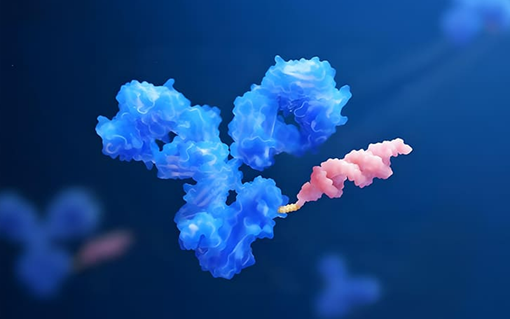
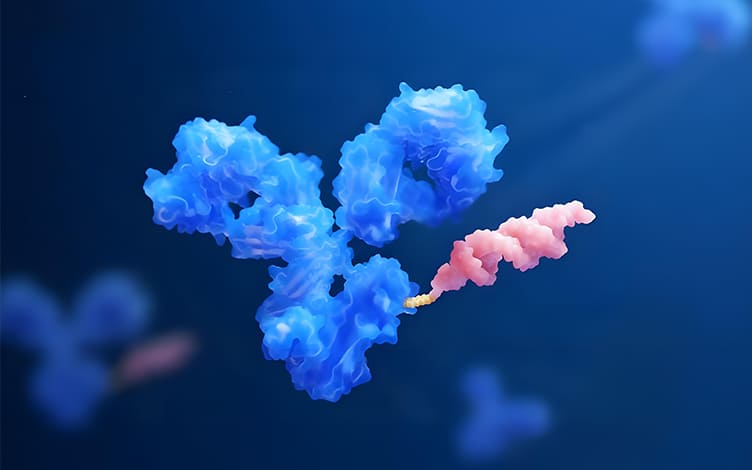
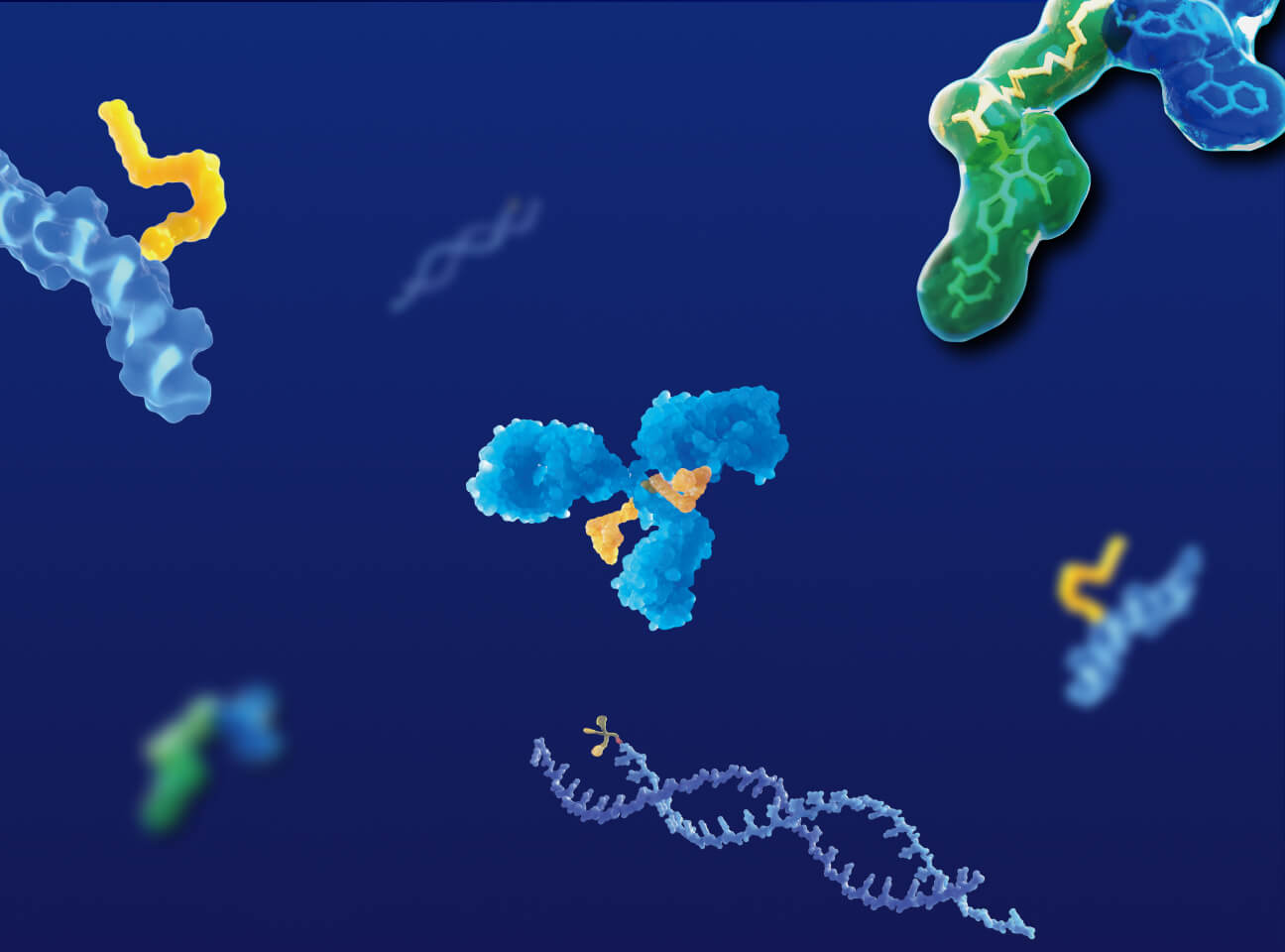
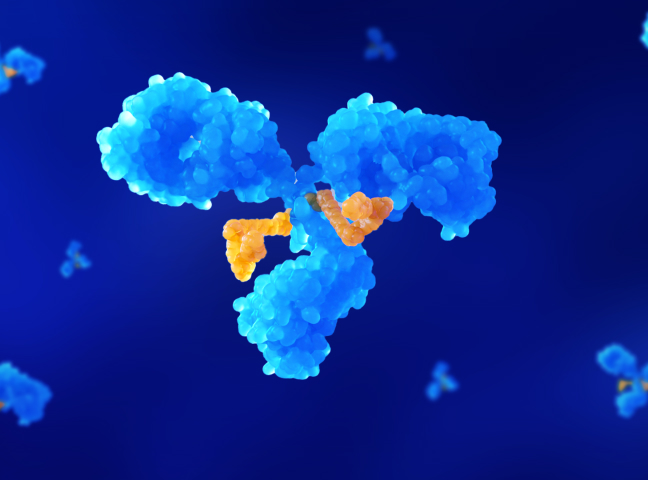
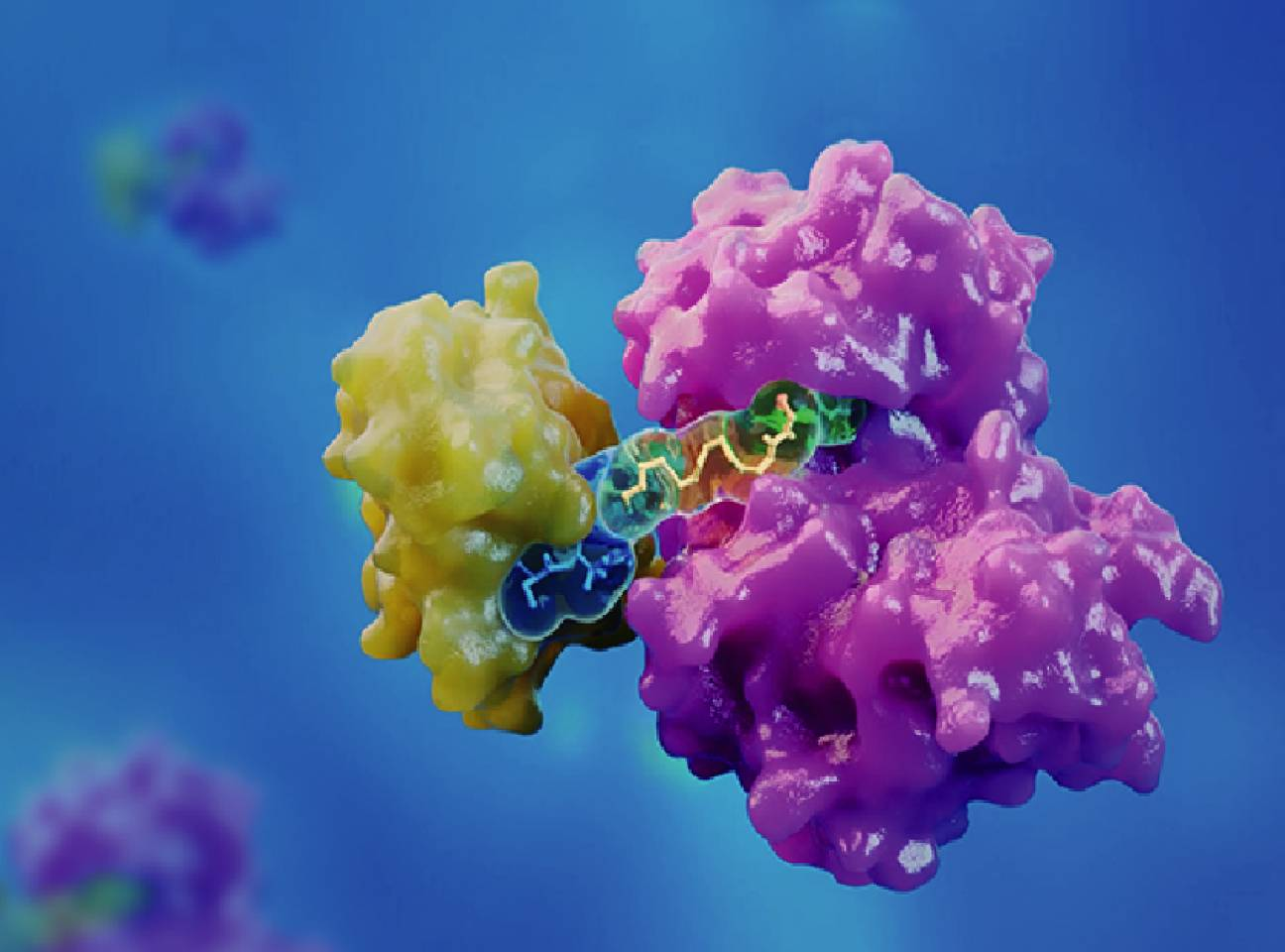
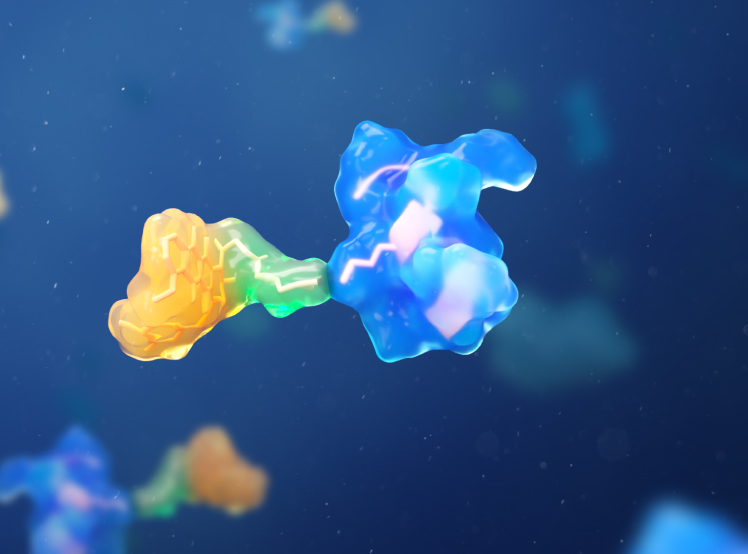
Antibody-oligonucleotide conjugates (AOCs), formed by linking a monoclonal antibody to a complexed siRNA or antisense oligonucleotide (ASO), are designed to overcome challenges associated with naked or chemically conjugated siRNAs. These challenges include rapid clearance from systemic circulation and lack of selective delivery of siRNA to target cells [1]. The structural complexity of AOCs, however, introduces significant challenges in characterizing their absorption, distribution, metabolism, and excretion (ADME) properties.
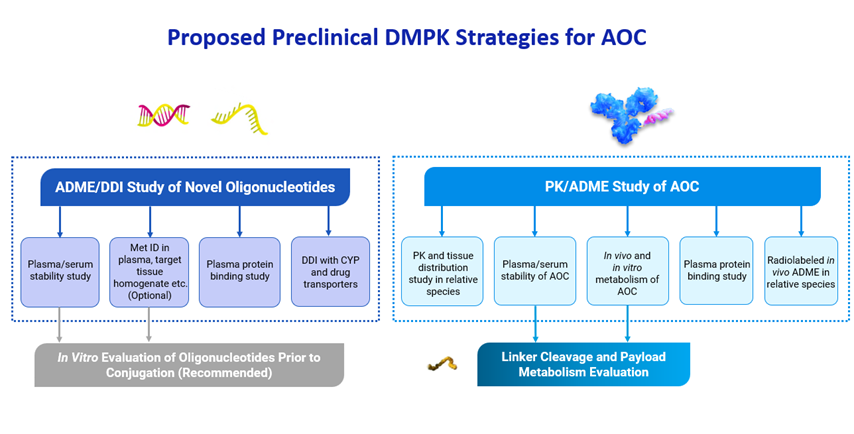
To address these challenges, WuXi AppTec DMPK has established a comprehensive and integrated research platform specifically for AOC therapeutics. This platform encompasses: (1) An in vitro ADME system for the stability and protein binding studies of AOCs and oligonucleotides ; (2) A bioanalytical platform capable of quantifying total antibody, intact AOC, free oligonucleotide, conjugated oligonucleotide, and total oligonucleotide; (3) A metabolite identification and profiling platform operating at both the oligonucleotide and intact AOC levels; (4) Radiolabeling synthesis services for AOCs.
This integrated platform is designed to advance client projects from screening to IND-enabling studies, accelerating the overall AOC drug development timeline.
Learn More

Key Capabilities and Platforms
-
In Vitro ADME Study Platform
Antibody-oligonucleotide conjugates (AOCs) are subject to extensive distribution and degradation by nucleases in vivo, and the stability of their oligonucleotide payloads is critical for effective delivery and pharmacological activity in both the circulatory system and target tissues. Furthermore, the stability of the linker in systemic circulation, along with the plasma protein binding characteristics of the released free oligonucleotides, has a profound impact on their pharmacokinetic/pharmacodynamic (PK/PD) profiles. Leveraging a well-established in vitro ADME research platform for oligonucleotide therapeutics, WuXi AppTec DMPK has developed comprehensive AOC in vitro stability evaluation systems covering various matrices, including plasma and serum. These systems provide robust support for early discovery and in vitro ADME studies of AOC therapeutics.



-
Comprehensive AOC Biotransformation Characterization Platform
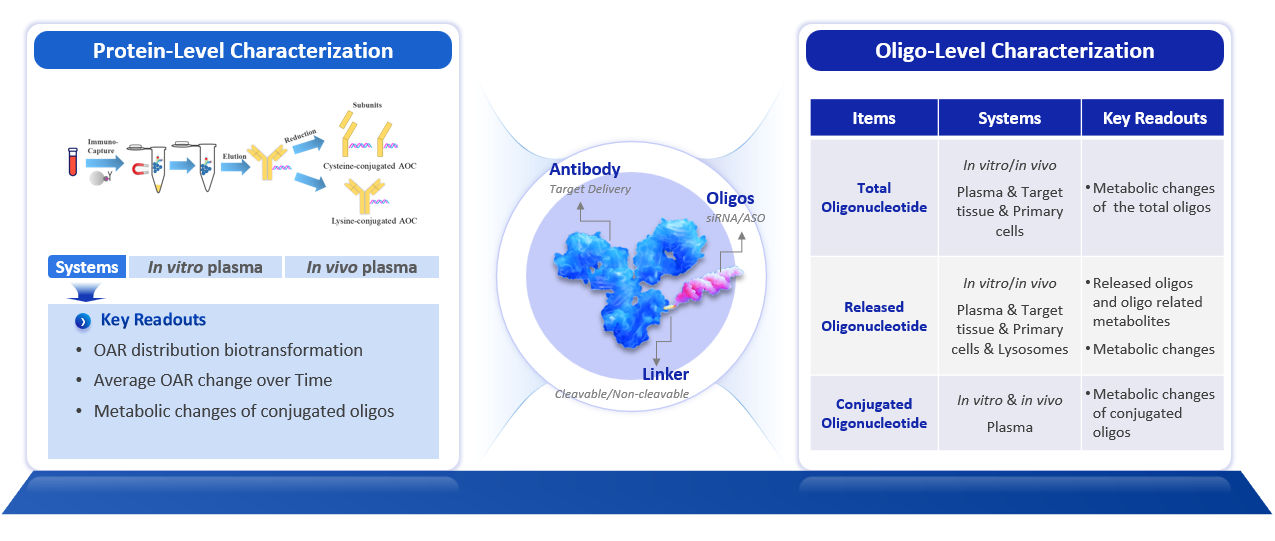
WuXi AppTec DMPK has developed a comprehensive multi-dimensional biotransformation characterization platform for AOCs based on advanced LC-HRMS:
Oligo-level profiling: Mapping metabolic changes across total oligo, released oligo, and conjugated oligo.
Protein-level characterization: Intact or sub-unit profiling of the AOC.
This strategy provides critical insights for AOC development: (1) Guiding Linker Optimization: Elucidating release mechanisms and mapping specific cleavage sites in plasma, target cells, and tissues. (2) Guiding Oligo Design: Assessing payload stability and identifying major biotransformation pathways. (3) Supporting Bioanalytical & PK/PD Strategies: Identifying the most relevant analytes for quantitative PK/TK assays, and offering the mechanistic basis to correlate systemic exposure with efficacy and safety.
-
Integrated Bioanalysis Platform
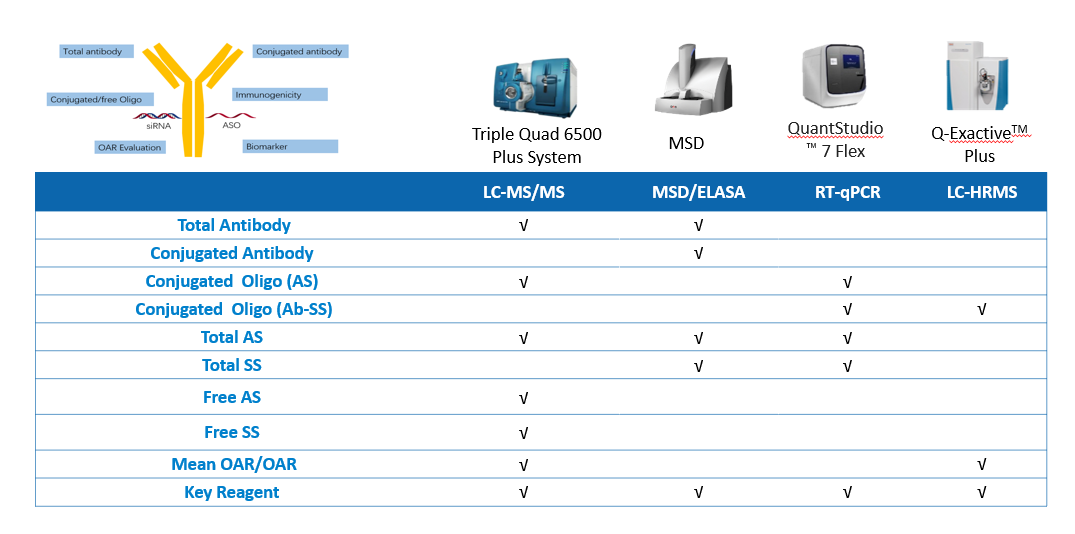
WuXi AppTec DMPK has built a comprehensive analytical platform for AOCs. Studies show that administration of AOCs can generate at least seven related analyte species in in vivo samples. A detailed understanding of the distribution and time-course of these species helps evaluate whether AOC delivery is efficient to reach the intended target, the effective concentration of the oligonucleotide, whether gene silencing meets expectations, and the relationships among these events.
Choosing the right analytical platforms is critical to obtain these key data. We have integrated liquid chromatography–mass spectrometry (LC–MS), ELISA/MSD, and RT-qPCR to create a broad detection capability for AOC biological components, including:Antibody-related species: total antibody, conjugated (bound) antibody, and intact antibody–sense strand (or intact antibody–ASO);
Oligonucleotide-related species: total antisense strand (or total ASO), and the antisense strand in free versus conjugated forms;
Oligonucleotide-to-antibody ratio (OAR).
-
Radiolabeled Antibody-Oligonucleotide Conjugate (AOC) Platform
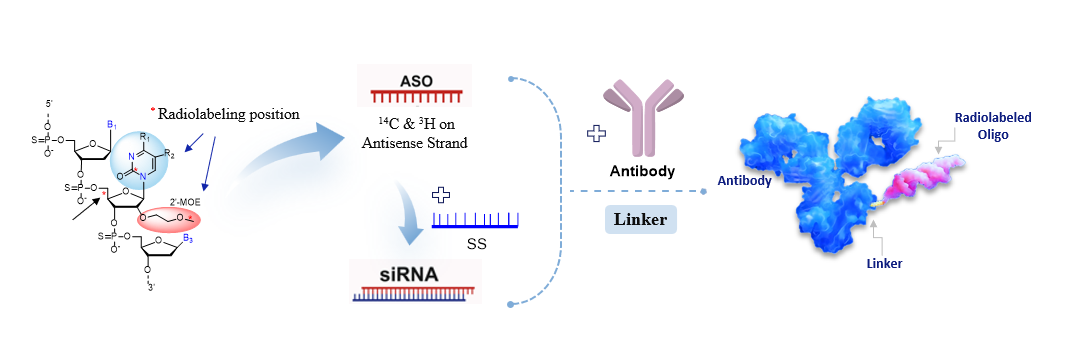
Integrating technologies in radioisotope labeling, oligonucleotide synthesis, and antibody chemical modification, the platform enables ¹⁴C or ³H labeling of oligonucleotides and AOCs, delivering high-quality test articles for in vivo ADME studies. Leveraging an automated solid-phase synthesis system and proprietary labeling processes, combined with analytical and detection methods including SEC-HPLC, SDS-PAGE, and high-resolution mass spectrometry, the platform ensures high radiochemical purity of the final product while preserving the biological activity of the AOC. Supported by well-established experimental systems and extensive resources in rodent and non-human primate models, the platform enables systematic studies on tissue distribution (QWBA), mass balance, and metabolite identification.
Experience
-
250+
AOC-related Projects


-
10+
Global AOC Clients

-
450+
Hands-on Experience with AOC Candidates

Study Strategies and Assays
-
The pharmacokinetic assessment of AOCs should encompass ADME studies of multiple components (intact AOC, antibody, and payload), as well as investigations into linker cleavage. Furthermore, it is essential to develop customized research strategies based on the specific molecular design of the AOC and its target indications, and to select relevant in vitro and in vivo models that accurately reflect its mechanism of action.
Tier 1 Hit to Lead | Tier 2 Lead Optimization→ PCC | Tier 3 IND Enabling | |
PK |
|
| |
ADME |
|
|
|
DDI |
|
FAQs
-

Which in vitro models should be used to evaluate AOC biotransformation?


In vitro models should cover possible enzymatic release pathways, cellular uptake and endolysosomal processing, such as plasma, serum, primary cells, and lysosomal fractions.
-
Which in vivo matrices (sample types) should be included in MetID studies?
In vivo MetID samples should cover circulation, target tissues, and excretory routes, such as plasma, muscle tissue (TfR1), and urine.
-
How does the MetID platform support linker/oligonucleotide optimization for AOC?
By identifying linker cleavage sites and major oligonucleotide metabolic sites, which can be used to design more stable linker chemistries, protect vulnerable positions or replace oligonucleotide modifications to improve tissue delivery and stability.
-
What specific analytes related to AOC are recommended for the nonclinical stage characterization?
At nonclinical stage for the in vivo PK/tissue distribution study, we suggest to detect intact AOC (conjugated payload) and total antibody in plasma (free payload analysis is optional); total oligonucleotide in target and relevant tissues.
-
What DMPK investigations are specifically recommended for the linker?
We recommend conducting: (1) Plasma/serum stability studies to evaluate linker stability in systemic circulation; (2) MetID studies to investigate linker cleavage sites in plasma, lysosomes, and target tissues.
Related Resources


-

Integrated Bioanalysis Platform for Antibody Oligonucleotide Conjugates in DMPK Studies
 WebinarsSep 09, 2026Learn More
-
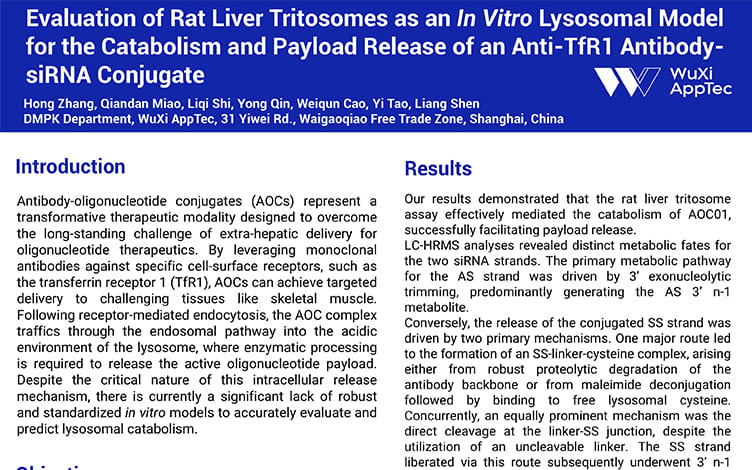
Evaluation of Rat Liver Tritosomes as an In Vitro Lysosomal Model for the Catabolism and Payload Release of an Anti-TfR1 Antibody-siRNA Conjugate
PostersJul 10, 2026Learn More -
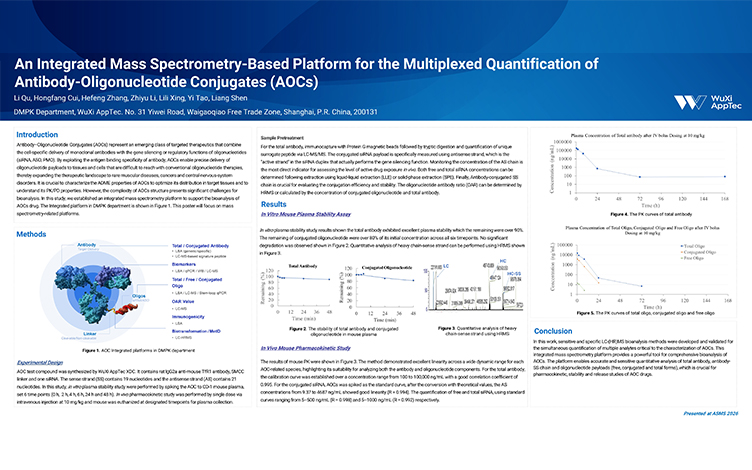
An Integrated Mass Spectrometry-Based Platform for the Multiplexed Quantification of Antibody-Oligonucleotide Conjugates (AOCs)
PostersJun 05, 2026Learn More -
DMPK Strategies for Advancing Preclinical Development of AOC Therapeutics
WebinarsMay 14, 2026Learn More -
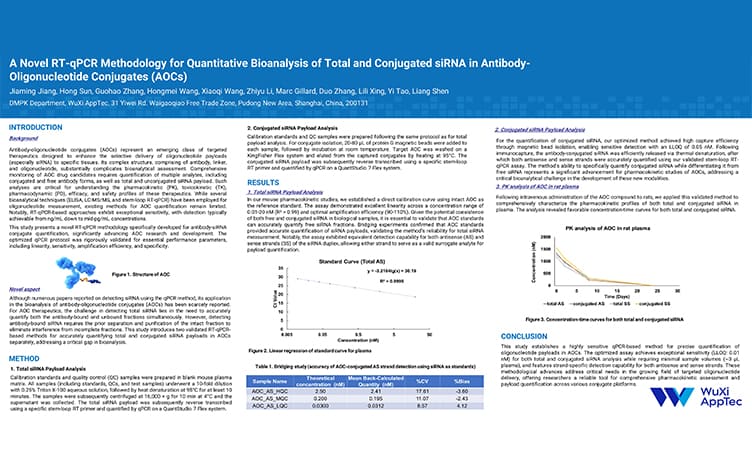
A Novel RT-qPCR Methodology for Quantitative Bioanalysis of Total and Conjugated siRNA in Antibody-Oligonucleotide Conjugates (AOCs)
PostersApr 17, 2026Learn More -
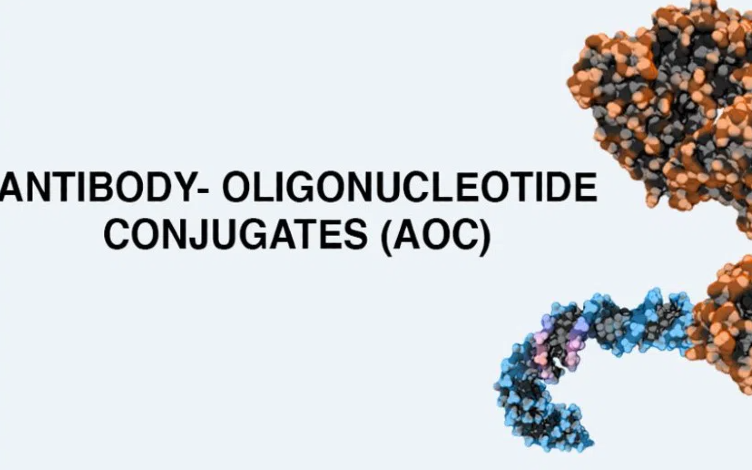
What Are Antibody–Oligonucleotide Conjugates (AOCs) and Their Structural Characteristics
ArticlesNov 28, 2025Learn More -
Spotlight on the DMPK and Bioanalysis Strategy of Antibody Oligonucleotide Conjugates (AOCs)
ArticlesNov 21, 2024Learn More

Reference
[1] Murphy A, Hill R, Berna M. Bioanalytical approaches to support the development of antibody-oligonucleotide conjugate (AOC) therapeutic proteins[J]. Xenobiotica, 2024, 54(8): 552-562.

Stay Connected
Keep up with the latest news and insights.
