



Conferences
19th EBF Open Symposium
-

17-19 November 2026
-

Barcelona, Catalonia, ES


In the tradition of reflecting on historic moments that reshaped scientific thinking, the 19th EBF Open Symposium (OS) looks back 500 years to the time of Paracelsus. At a time when medicine was dominated by rigid doctrine, he challenged prevailing dogma and argued that scientific practice should be grounded in observation, context and purpose. His thinking marked a shift from inherited rules toward fit-for-purpose science.
Today, bioanalysis faces a similar moment. Rapid technological advances, new modalities, increasing data complexity and evolving regulatory expectations are reshaping how bioanalytical science is applied in Pharma R&D. Longestablished approaches are not necessarily wrong, but they may no longer be sufficient for every context.
The 19th EBF OS invites the community to reflect on this evolution, exploring how bioanalysis can continue to innovate while maintaining scientific foundations and responsible interpretation. In the spirit of Paracelsus, the symposium encourages open discussion on how context of use, purpose and impact should guide the future of bioanalysis. Following the successful move to a three-day format at the 18th OS, with strong participation and engagement throughout the meeting, the 19th OS will continue with a full three-day programme.
Featured Presentations
A Fully Integrated Automation Platform in DMPK Bioanalysis: From Sample Preparation to LC-MS/MS Quantification
Dr. Yi Tao
Sample preparation, liquid chromatography tandem mass spectrometry (LC-MS/MS) analysis, and data processing have traditionally operated as disconnected workflows, creating bottlenecks in throughput and data consistency while imposing a labour-intensive burden on analysts. DMPK bioanalysis faces special challenges due to diverse target analytes and sample matrices, and tight turn-around time. This presentation introduces a fully integrated automation platform that seamlessly connects these critical stages into a single, uninterrupted workflow for DMPK studies.
The platform integrates a sample preparation automation system (dual industrial robotic arms, 30+ peripheral devices), an AGV-based plate delivery system (collaborative arms on autonomous mobile robots), multiple LC-MS/MS systems, and a unified central control hub. Together, they enable a continuous, hands-free analytical pipeline.
Integrated Bioanalysis Strategies of Antibody Oligonucleotide Conjugates (AOCs) for Preclinical Pharmacokinetic Studies
Dr. Zhiyu Li
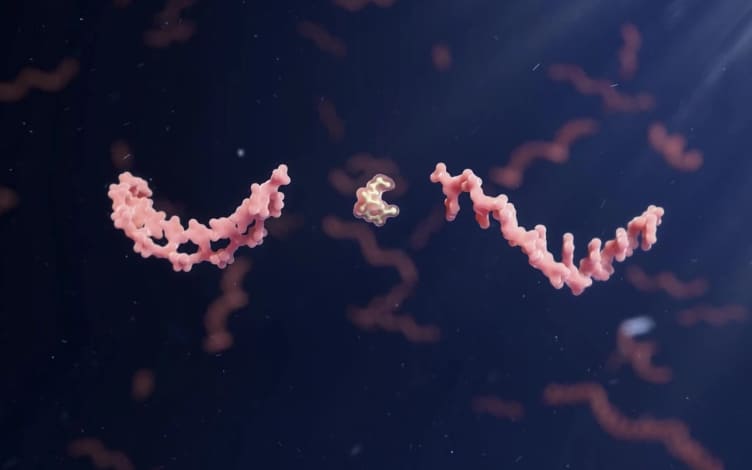
Antibody Oligonucleotide Conjugate (AOC) is an emerging targeted therapeutic modality that combines the selective delivery of antibodies, with gene silencing or regulatory functions of oligonucleotides. Comprehensive ADME and PK/PD characterization of AOCs often requires measurements of multiple analytes, including total, conjugated and free oligonucleotide, total and conjugated antibody, immunogenicity, and related biomarkers, as well as determining oligonucleotide-to-antibody ratio (OAR), profiling large- and small-molecule metabolites.
An integrated bioanalysis strategy has been developed to support comprehensive AOC characterization in preclinical studies, including LC-MS/MS, LC-HRMS, ELISA, MSD, and stem-loop RT-qPCR. Bioanalytical approaches are selected according to target analyte, required specificity, sensitivity, reagent availability, and necessity for structural characterization. For example, hybrid immunoassay such as hybridMSD and hybrid-LC-MS/MS are complimentary for conjugated antibody quantitation, dependent on requirement on specificity and reagent availability; for conjugated oligonucleotide analysis, hybrid LC–MS/MS, hybrid LC–HRMS, and/or RT-qPCR can be chosen based on the priority for sensitivity, specificity, and/or structural characterization; for biotransformation and metabolite identification studies, hybrid LC-HRMS workflow would be optimal.
Speakers
Our poster
Other Resources
-
 Our poster
 -
Other Resources
-
-
Navigating Ligand-Binding Assay Challenges for Antibody-Oligonucleotide Conjugates Across Oligonucleotide Types and Biological Matrices
Antibody-oligonucleotide conjugates (AOCs) combine the targeting properties of antibodies with oligonucleotide payloads, but their structural heterogeneity and diverse biological matrices create distinct bioanalytical challenges. This work summarizes cross-program experience in developing ligand-binding assays for AOCs containing antisense oligonucleotide or small interfering RNA payloads, with emphasis on total oligonucleotide quantification in serum, plasma, whole blood, and tissues.
Get the PDF via email when it's ready. Leave your email address below.
WuXi AppTec requires your contact information to share our updates. Please review our privacy policy here. You can unsubscribe at any time.

View More -





Stay Connected
Keep up with the latest news and insights.
Submission successful!
We will send you an email with all the posters from this conference once they are ready. Thank you!
-
ok


