



Scientific Reuse of Non-Naïve NHPs: Washout Strategies for PK Studies of Novel Therapeutic Modalities
-

Articles
-

Nov 06, 2026
Nonhuman primates (NHPs) are key translational models for preclinical pharmacokinetic (PK) studies of novel therapeutic modalities. In particular, in the evaluation of biologics, their target cross-reactivity and metabolic similarities to humans make NHPs central to predicting human exposure and determining the first-in-human (FIH) starting dose. However, in recent years, access to NHPs has become increasingly constrained by high market prices, long lead times, and breeding challenges[1,2]. Alongside increasing global emphasis on the 3Rs in laboratory animal ethics, scientifically sound use of NHP resources without compromising study quality has become a major focus across the industry for DMPK studies.
The scientifically informed use of non-naïve NHPs after an appropriate washout period is an important strategy for alleviating this resource bottleneck. Non-Naïve NHPs are defined as NHPs that have been used in previous studies and, after an adequate washout period, are being considered for enrollment in a new study. Traditionally, PK studies of novel molecular entities have relied almost exclusively on naïve animals because of concerns about interference from prior drug exposure or anti-drug antibodies (ADA). Recent experience indicates that, during early-stage pharmacokinetic/pharmacodynamic (PK/PD) screening, appropriately reusing non-naïve NHPs after a washout period can substantially reduce the need for new animals and shorten lead times, markedly improving study efficiency in DMPK studies without compromising data quality while aligning with the 3Rs[3].
However, reusing non-naïve NHPs after a washout period is not simply a matter of using the same animals again. It is a risk-management process requiring systematic decision-making. Every step, from animal selection and washout period design to baseline data collection and data interpretation, requires scientifically rigorous consideration. This article examines these key steps and presents an integrated practical framework for the scientifically informed reuse of NHPs in PK studies of novel therapeutic modalities, supporting the sustainable use of NHP resources in rigorous DMPK studies.
Key Risks and Mitigation Strategies for Reusing NHPs After Washout
Three Major Risks: From Data Distortion to Physiological Shifts
Without systematic assessment, indiscriminate enrollment of non-naïve NHPs after a washout period may compromise even a carefully designed PK/PD study by distorting its data. The principal risks in DMPK studies fall into three categories:
Risk 1: Pharmacokinetic Interference: Previously administered compounds may induce or inhibit the expression and activity of hepatic drug-metabolizing enzymes (e.g., CYP450 enzymes) or transporters, causing abnormally high or low clearance (CL) of the new compound. Changes in the enzyme profile are often difficult to reverse completely through routine washout periods. Once they occur, these changes directly distort key parameters in pharmacokinetic studies, such as the area under the concentration-time curve (AUC), undermining the reliability of FIH dose extrapolation.
Risk 2: Immunological Cross-Reactivity: If the previous treatment was a large-molecule biologic, the nonhuman primate may have developed ADA. These may not only alter its baseline immune status but also cross-react with the new molecule, resulting in "apparent rapid clearance". In other words, the new drug is cleared not because of its intrinsic characteristics, but because it is inadvertently targeted by pre-existing immune memory. The half-life and bioavailability estimates obtained from DMPK studies may therefore differ substantially from those observed in humans.
Risk 3: Shifts in Physiological Baselines: Previous experiments may have caused latent, mild impairment of liver and kidney function. Even when a nonhuman primate appears normal, its metabolic and excretory capacity may already have been affected, directly compromising the quality of PK data for the new drug during DMPK studies.
Five Safeguards: Establishing a Risk-Minimization Strategy
Regardless of therapeutic modality, the following five basic principles should be followed before reusing non-naïve NHPs after a washout period:
Comprehensive Traceability of Prior Exposure
Systematically review the nonhuman primate's complete dosing history, including therapeutic modality, dosage, route of administration, and dosing duration. Animals with unknown or incomplete prior dosing records must be excluded from DMPK studies.
Scientifically Justified Washout Period Design
Determine the washout period case by case, considering the half-life, tissue accumulation, and duration of pharmacological effects of the previous drug. The period should generally be no shorter than five to seven half-lives to ensure adequate clearance of the previous drug and its active metabolites.
Rigorous Baseline ADA Screening
Before enrollment in new DMPK studies, perform rapid pre-enrollment ADA screening to detect anti-drug IgG antibodies. Exclude non-naïve NHPs that are ADA-positive or have titers above a prespecified threshold.
Verification of Baseline Target/Pathway Function
Confirm that previous drug exposure has not caused persistent perturbation of the target pathway relevant to the current study. Regardless of whether the targets overlap, exclude any nonhuman primate whose biomarkers for the current target pathway have not returned to normal levels after the washout period.
Pre-enrollment Clinical Pathology Assessment
Comprehensively assess key baseline parameters, including hepatic and renal function and hematology. Non-naïve NHPs may be enrolled in pharmacokinetic studies when these key parameters are within normal ranges.
These five safeguards have been incorporated into WuXi AppTec DMPK's evaluation framework for large-animal reuse, ensuring that data for every non-naïve NHP reused after a washout period are traceable and verifiable for robust DMPK studies.
NHPs Reuse Risks Following Exposure to Commonly Studied Novel Therapeutic Modalities
Immunogenicity risk, persistence of mechanism-related effects, and toxicity profiles vary markedly across novel therapeutic modalities. A one-size-fits-all approach to risk control is therefore inappropriate for DMPK studies; strategies must be tailored to the modality. Drawing on the survey-based consensus of the IQ Consortium NHP Reuse Working Group, which surveyed 15 pharmaceutical companies, and the nonclinical characteristics of different novel therapeutics[4], the reuse risk profiles associated with prior exposure to common modalities in NHPs are summarized below.
Table 1. NHPs reuse risk profiles following prior exposure to prominent novel therapeutic modalities.
Molecular type | Core risk feature | Criteria for reuse | Recommended applicable scenario |
Small molecule drug | Previous drug induced or inhibited CYP450 enzymes or transporters; immunogenicity is extremely low with no ADA risk. | Confirm restoration of enzyme activity to baseline during the washout period; normal liver and kidney function. | Non-naïve NHPs previously exposed to small-molecule types are broadly applicable and can be used across various nonclinical studies, including efficacy, PK/PD, and safety DMPK studies. |
Oligonucleotide therapeutic | Sustained pharmacodynamic effects may cause long-term target pathway silencing or compensatory changes; off-target effects can inadvertently perturb non-target pathways. | Baseline target-pathway function verified (mRNA and downstream biomarkers returned to normal range); normal liver and kidney function. | Limited-use model (non-naïve monkeys after washout): Monkeys previously exposed to oligonucleotide drugs that, after the washout period, show no perturbation of the relevant target pathways. These animals are suitable for noncritical exploratory studies (early efficacy and preliminary PK/PD assessments). |
Antibody therapeutic (e.g., monoclonal antibody, bispecific antibody, fusion protein) | High immunogenicity risk: prior ADA can not only alter the immune baseline but may also cross-react with new molecules; some antibodies exert long-lasting immunomodulatory effects. | Baseline ADA negative; target-pathway function validated at baseline; washout ≥5-7 half-lives with pharmacodynamic response confirming return to normal levels; normal liver and kidney function. | Limited-use model (non-naïve monkeys after washout): Monkeys previously exposed to antibody therapeutics that have undergone an extended washout period and whose target-pathway function has returned to normal. These animals may be used for noncritical/exploratory studies (e.g., dose exploration, biomarker discovery). |
Peptide | Long-acting modifications may cause sustained perturbation of target pathways; cyclized peptides or lipidation may interfere with CYP enzymes and transporters. | No sequence homology or domain overlap between the prior drug and the current peptide; washout ≥5-7 half-lives with pharmacodynamic confirmation of recovery; normal liver and kidney function. | Limited-use model (non-naïve monkeys after washout): Monkeys previously exposed to peptide therapeutics. Their use is restricted to noncritical/exploratory studies, such as early efficacy screening, dose-range finding, dosing-regimen optimization, and preliminary PK/PD characterization. |
ADC | Multicomponent composite toxicity, with individual components independently affecting safety; immunogenicity risk - ADA can interfere with efficacy and safety assessment; payload-related toxicity; off-target toxicity; tissue accumulation and long half-life. | Baseline ADA negative; target-pathway biomarkers returned to normal range; washout ≥5-7 half-lives with pharmacodynamic confirmation of recovery; PK of intact conjugate, carrier, and free payload all returned to baseline. Normal liver and kidney function. | Limited-use model (non-naïve monkeys after washout): Monkeys previously exposed to ADC (antibody-drug conjugate). Their use is limited to noncritical/exploratory studies (e.g., PK/PD, dose-range finding, biomarker studies). |
In addition, antibody-payload conjugates, such as antibody-oligonucleotide conjugate (AOC) and antibody-peptide conjugate (APC), are dual-mechanism conjugates that integrate antibody-mediated targeted delivery with oligonucleotide-mediated gene regulation or peptide-mediated pharmacological modulation within a single molecule. They are not simply additive combinations of individual modalities and have more complex risk profiles in DMPK studies: immunogenicity can compound payload-related off-target effects, involving off-target binding, unintended gene silencing, or activation of unintended receptors. Linker instability may also cause premature payload release, altering biodistribution, clearance, and exposure-response relationships and thereby increasing PK/PD complexity. When evaluating whether non-naïve NHPs previously exposed to these agents and subsequently washed out are suitable for pharmacokinetic studies of novel therapeutic modalities, interference from prior exposure, immune memory, and residual pharmacological effects in baseline ADA assessments and target/pharmacodynamic pathways must be ruled out after the washout period.
An Example: Establishing a Screening Framework for Non-Naïve NHPs Previously Exposed to Oligonucleotide Therapeutics
Core Rationale: From Passive Exclusion to Active Selection
Oligonucleotide therapeutics, including small interfering RNA (siRNA) and antisense oligonucleotide (ASO), generally pose a low immunogenicity risk in NHPs. Approved GalNAc-siRNA therapeutics generally have low ADA response rates (≤6%)[5]. The principal risk is not ADA formation, it is whether previous drug exposure interferes with the target pathway relevant to the current study.
As an important component of integrated solutions for DMPK studies, NHPs intended for oligonucleotide studies can first be stratified according to prior exposure. Oligonucleotide-naïve NHPs, defined as animals never exposed to any oligonucleotide therapeutic, generally have no drug/payload residues or immune-memory interference attributable to previous oligonucleotide exposure. Additional washout period verification specifically addressing prior oligonucleotide exposure is therefore generally unnecessary for these animals. They can be used in a range of oligonucleotide DMPK studies, including comprehensive PK/PD characterization and immunogenicity risk assessment. In contrast, for non-naïve NHPs previously used in oligonucleotide studies and subsequently allowed to undergo a washout period, drug/payload residues must first be excluded. Baseline target-pathway and pharmacodynamic function must then be systematically verified as having returned to normal ranges to identify NHPs suitable for reuse in new DMPK studies. Thus, screening can involve stratification or exclusion based on previous oligonucleotide exposure, or selection of non-naïve NHPs after a washout period through verification that baseline target-pathway function has returned to normal.
Three-Domain Screening: Adequate Washout Period, Target Verification, and Clinical Pathology
Confirmation of Exposure History and Adequacy of Washout Period
Review prior dosing records to establish the previous test article, route of administration, dose, dosing frequency, and date of the last dose. Determine the required washout period on a case-by-case basis using the drug's elimination half-life, propensity for tissue accumulation, and duration of pharmacodynamic effects. As a general principle, the period should be no shorter than five to seven half-lives. Extend it as appropriate for drugs with long half-lives or substantial tissue accumulation before initiating new DMPK studies. At the end of the washout period, blood samples may be collected to measure residual concentrations of the previous drug and its metabolites, confirming that levels are below the lower limit of quantification of the analytical method or below a threshold at which they would not affect the current pharmacokinetic studies. The liver or other target-tissue biopsies can be obtained to directly quantify residual drug and metabolite concentrations and confirm that tissue accumulation has declined to an acceptable level, further ruling out residual-exposure risks in non-naïve NHPs.
General clinical observations of the NHPs should also be considered to exclude manifestations of residual pharmacological activity.
Verification of Baseline Target-Pathway Function
Even when the pathways targeted by the previous and new drugs do not overlap, prior exposure may still perturb the pathway under investigation through off-target effects or downstream compensatory mechanisms. Therefore, before enrolling non-naïve NHPs previously used in nucleic acid therapeutic studies and subsequently washed out, target-gene mRNA expression, target-protein levels, and downstream effect biomarkers relevant to the current DMPK studies must be measured. NHPs may be enrolled only after these parameters are confirmed to have returned to normal ranges post-washout period.
Baseline Assessment of Hepatic and Renal Function and Hematology
The liver and kidneys are the main target organs of oligonucleotide-associated toxicity, and thrombocytopenia may occur with some ASOs. Before enrollment in DMPK studies, comprehensively assess parameters such as alanine aminotransferase (ALT), aspartate aminotransferase (AST), blood urea nitrogen (BUN), creatinine, and platelet count. Exclude any non-naïve NHPs with an abnormal result. Through this three-domain screening framework, WuXi AppTec DMPK ensures complete and traceable baseline data for NHPs enrolled in pharmacokinetic studies.
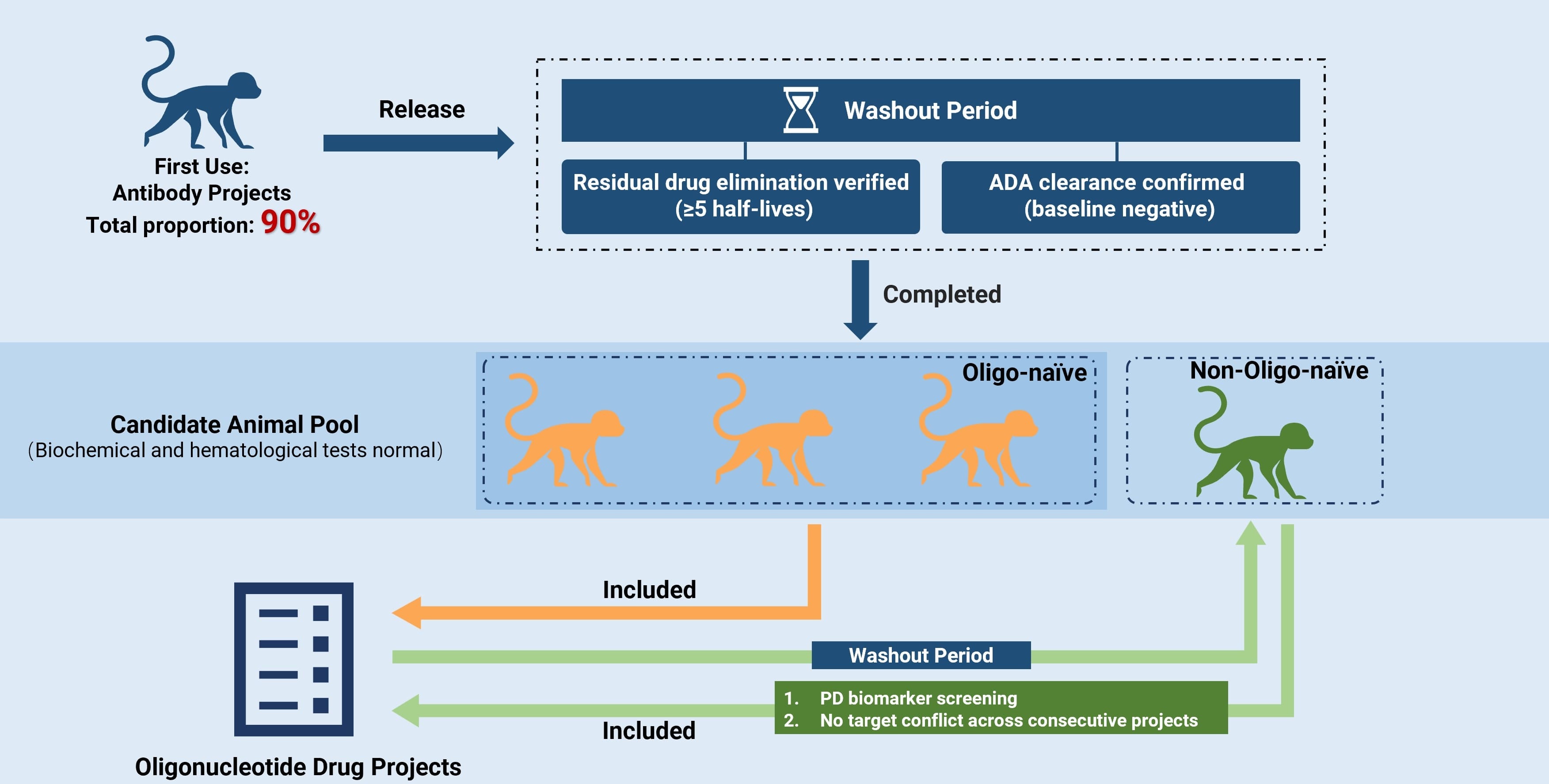
Figure 1. Screening and evaluation framework for non-naïve NHPs after a washout period from prior oligonucleotide DMPK studies.
The Value of Scientifically Informed Reuse: From Conserving Resources to Improving Efficiency in DMPK Studies
From "Usable" to "Fit for Purpose": Improving Efficiency Through Precise Selection
Previous oligonucleotide exposure does not automatically make a nonhuman primate unsuitable. The key question is whether the target pathway has been perturbed. Systematic screening of baseline target-pathway function enables targeted exclusion of non-naïve NHPs with perturbed pathways and inclusion of NHPs that, despite previous use in oligonucleotide studies, have intact function in the pathway relevant to the current study. This strategy substantially shortens project start-up timelines for pharmacokinetic studies while maintaining data reliability.
From Single Use to Scientifically Informed Reuse: Building a Sustainable NHP Research Framework
The reuse of non-naïve NHPs after a washout period is not a second-best stopgap, but a practical strategy for balancing regulatory compliance, scientific rigor, and resource sustainability in drug development. Through systematic risk assessment, stringent screening, and comprehensive baseline verification, NHPs that have undergone an optimal washout period can help alleviate NHPs resource constraints without compromising data reliability, supporting efficient DMPK studies of novel therapeutic modalities.
Conclusion
Scientifically informed use of non-naïve NHPs after a washout period requires a systematic approach. From comprehensive assessment of the risks associated with prior drug exposure, through an in-depth understanding of modality-specific characteristics, to precise verification of target-pathway status, each step in DMPK studies draws on the study team's professional judgment and accumulated technical expertise.
Drawing on its extensive pool of NHPs, WuXi AppTec DMPK has established an assessment framework for scientifically informed reuse after a robust washout period. It can provide a sustained annual supply of rigorously screened non-naïve NHPs for the development of a range of novel therapeutic modalities. This helps clients gain a competitive market advantage. It also offers integrated, high-quality, and efficient solutions for preclinical pharmacokinetic and DMPK studies.
From NHP resource management to the delivery of accurate study data, WuXi AppTec DMPK is committed to applying its expertise to drug development, maximizing the value of every scarce resource, and safeguarding data quality throughout the process.
Authors: Guangyuan Fan, Zhihai Li, Guang Yang, Qian Qian, Wenting Shi, Jing Jin, Shoutao Liu
Talk to a WuXi AppTec expert today to get the support you need to achieve your drug development goals.
Committed to accelerating drug discovery and development, we offer a full range of discovery screening, preclinical development, clinical drug metabolism, and pharmacokinetic (DMPK) platforms and services. With research facilities in the United States (New Jersey) and China (Shanghai, Suzhou, Nanjing, and Nantong), 1,300+ scientists, and over fifteen years of experience in Investigational New Drug (IND) application, our DMPK team at WuXi AppTec are serving 1,800+ global clients, and have successfully supported 2,100+ IND applications.
Reference
[1] Frost & Sullivan. Global Non-Human Primate Market Analysis[R]. 2026.
[2] Global Times. Lab monkeys top $29,000 amid supply crunch driven by booming drug R&D[N/OL]. 2026-07-19.
[3] Ménochet K, Yu H, Wang B, et al. Non‑human primates in the PKPD evaluation of biologics: Needs and options to reduce, refine, and replace (A BioSafe White Paper) [J]. mAbs. 2022;14(1):2145997.
[4] Mattis C, Bratcher N, Burns M, et al. Increasing the Reuse of Protein Non-Naïve Nonhuman Primates in Pharmaceutical Drug Discovery and Development: An Overview and Industry Position on the Challenges and Benefits [J]. Int J Toxicol. 2022;41(4):291-296.
[5] Zhao A, Bond S, Clausen V, et al. Immunogenicity Assessment for siRNA Therapeutics: A Risk‑Based Proposal for Event‑Driven Testing [J]. The AAPS Journal. 2026;28:106.


Related Services and Platforms


-
 In Vivo PharmacokineticsLearn More

-
Novel Drug Modalities DMPK Enabling PlatformsLearn More
-
Rodent PK StudyLearn More
-
Large Animal (Non-Rodent) PK StudyLearn More
-
Clinicopathological Testing Services for Laboratory AnimalsLearn More
-
High-Standard Animal Facilities and Animal WelfareLearn More
-
Preclinical Formulation ScreeningLearn More






Stay Connected
Keep up with the latest news and insights.

