



Exploring Oligonucleotide Therapeutics: An Overview of Pharmacokinetic Strategies
-

Articles
-

Sep 29, 2026
Introduction to Nucleic Acid Drugs
Nucleic acid drugs have gained significant attention in recent years as a highly promising area of new drug development. With their unique technical features, they are expected to become the third wave of pharmaceutical innovation, following small molecule and antibody drugs. Among the known disease-related pathogenic proteins in the human body, over 80% cannot be targeted by conventional small molecule drugs or biological agents, making them "undruggable" protein targets. Nucleic acid drugs can act directly on disease-causing target genes, recognize the target mRNA, and inhibit translation through base complementarity, thus regulating protein expression to achieve therapeutic goals. Consequently, nucleic acid drugs are capable of overcoming the limitations of existing druggable targets and offer tremendous potential for treating previously "undruggable" diseases. Furthermore, they are less prone to drug resistance, exhibiting high specificity and long-term efficacy, which greatly improves their safety and therapeutic efficacy.
Nucleic acid drugs represent a rapidly expanding class of therapeutics and include antisense oligonucleotides (ASO), small interfering RNA (siRNA), microRNA (miRNA), small activating RNA (saRNA), messenger RNA (mRNA), aptamers, ribozymes, and antibody-oligonucleotide conjugates (AOCs), among others. Nucleic acid therapeutics represent a novel therapeutic modality and the next generation of pharmaceutical technology, following traditional small-molecule drugs and protein-based therapeutics.
This article focuses on a class of nucleic acid drugs (hereafter referred to as oligonucleotides) that are shorter than 30 nucleotides (nt) in length. As of 2022, oligonucleotides (marketed and under clinical trials) have been approved or tested in 102 different indications across 14 therapeutic fields, with the main therapeutic fields being metabolic disorders, cancer, neurology, and ophthalmology[1]. To date, approximately 24 oligonucleotide therapeutics have been approved by major regulatory agencies worldwide, including antisense oligonucleotides (ASOs), small interfering RNAs (siRNAs), phosphorodiamidate morpholino oligomers (PMOs), and aptamer-based therapeutics, demonstrating the growing clinical maturity of nucleic acid medicines.
What Are Oligonucleotide Therapeutics
Oligonucleotides, consisting of synthetic single or double-stranded modified ribonucleotides (RNA) or deoxyribonucleotides (DNA) less than 100 nt in length, act on target genes based on Watson-Crick base pairing and can modulate gene expression via a variety of mechanisms. Since oligonucleotides target selected sequences through Watson-Crick base pairing with DNA or RNA, they can theoretically target any gene of interest by designing an appropriate nucleotide sequence that is highly complementary to the target DNA or RNA sequence. Therefore, oligonucleotide therapeutics are expected to have better drug-like properties compared to small molecule drugs.
Exogenous oligonucleotides need to overcome multiple obstacles to enter the body and exert their pharmacological function: they are structurally unstable and susceptible to degradation by endogenous nucleases; they have large, negatively charged molecular structures, which makes them difficult to penetrate cell membranes and reach the intracellular space; they experience ineffective endosomal escape into the cytoplasm; and they are immunogenic, potentially activating immune responses in the body. With technological advancements, many of these challenges have been addressed through chemical modification and delivery system technology breakthroughs, which have played a crucial role in the development of oligonucleotide therapeutics.
How Does Oligonucleotide Modification Enhance Stability
Chemical modification can increase stability against nucleases and improve target-binding affinity. The first generation of chemical modifications focused on modifying the phosphate backbone, such as phosphorothioate (PS) modification. The second generation of chemical modifications involved modifications at the 2'-O position of RNA and the 2' position of DNA. Commonly used modifications include 2'-O-methyl (2-OMe), 2'-methoxyethyl (2-MOE), and 2'-fluoro (2-F). The third generation of chemical modifications included modification of the ribose and base. Common chemical modifications of oligonucleotides[2,3] are shown in Figure 1.
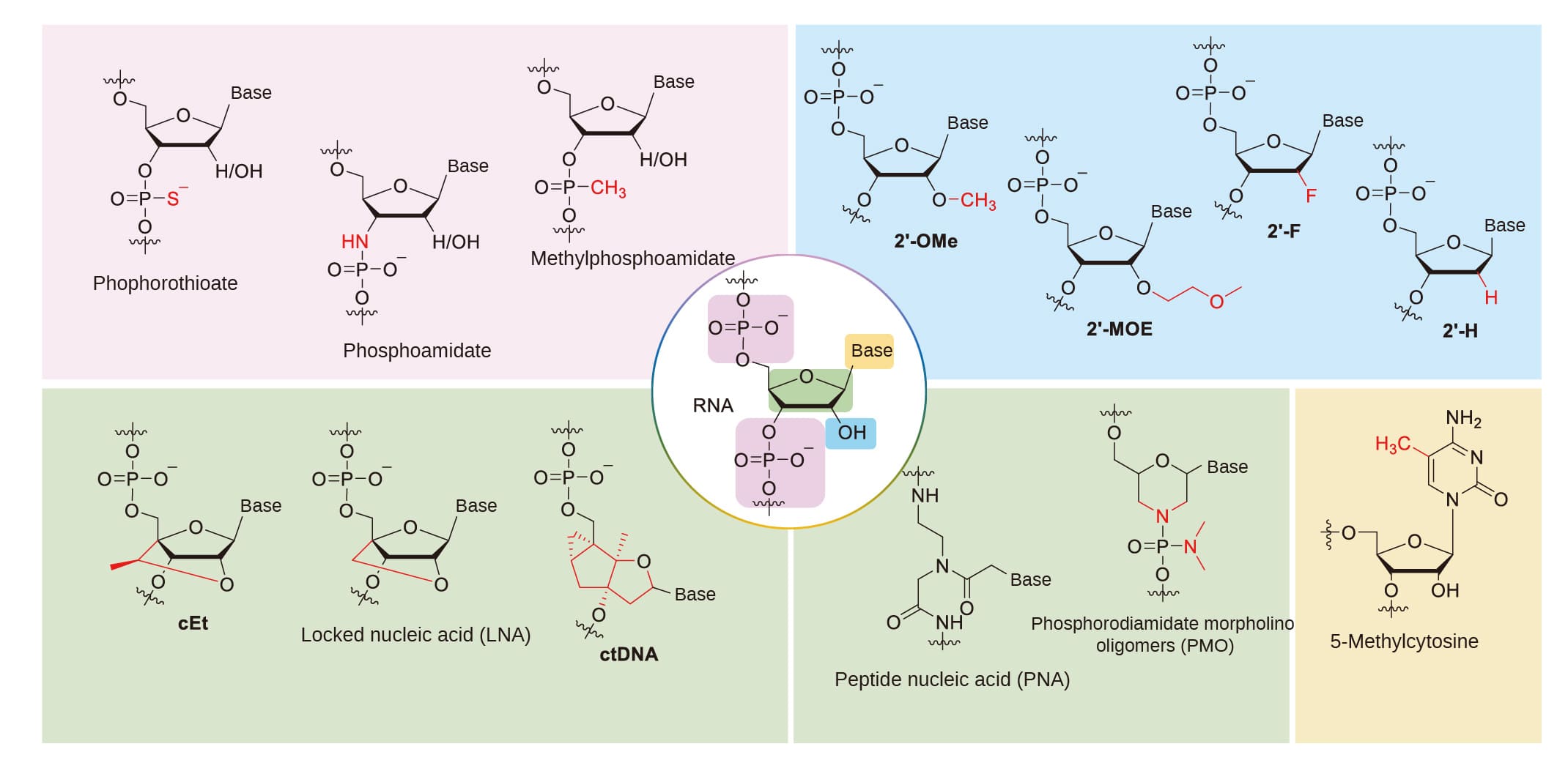
Figure 1. Common chemical modifications of oligonucleotides. Adapted from reference[2-3]
How Are Oligonucleotide Drugs Delivered
Oligonucleotides require the aid of delivery systems to improve delivery efficiency, reduce doses, and improve tolerability, thereby enhancing drug safety. Over the years, various delivery systems have been developed. The successful delivery systems are lipid nanoparticle (LNP) technologies and targeted delivery achieved through specific ligand binding (e.g., N-acetylgalactosamine: GalNAc)[4].
What Are the Mechanisms of Action of Oligonucleotide Drugs
Oligonucleotide drugs include various types such as ASO, siRNA, miRNA, aptamers, miRNA blockers, miRNA agonists, and unmethylated CpG oligonucleotides. The mechanisms and sites of action of various oligonucleotides are illustrated in Figure 2. Depending on their mechanism of action, oligonucleotide drugs can decrease, increase, or restore protein expression[2].
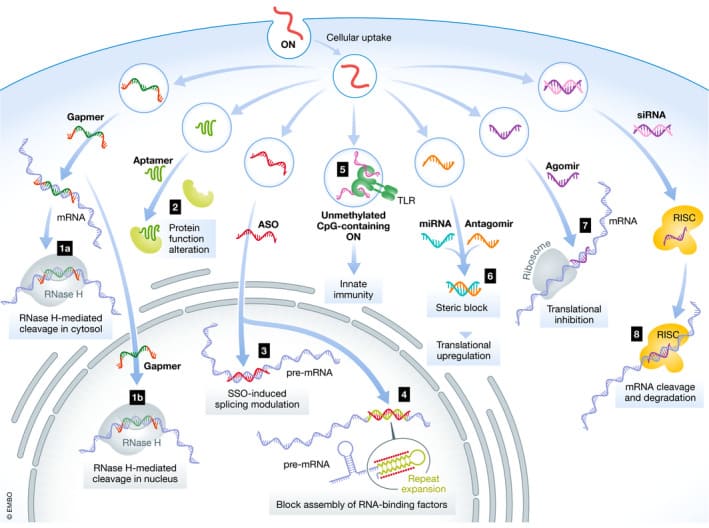
Figure 2. Mechanisms and sites of action of oligonucleotides[2]
Due to the distinct mechanisms of action of each oligonucleotide, they exert inhibitory effects at different stages of pathogenesis. As shown in Figure 3, decoys target DNA-encoded transcription factors in the upstream process of expression; ASO, siRNA, and miRNA act at the mRNA level; and aptamers directly inhibit the activity of proteins involved in pathogenesis. Their common feature is their ability to inhibit disease progression by selectively modulating gene expression and downstream disease-associated pathways[5].
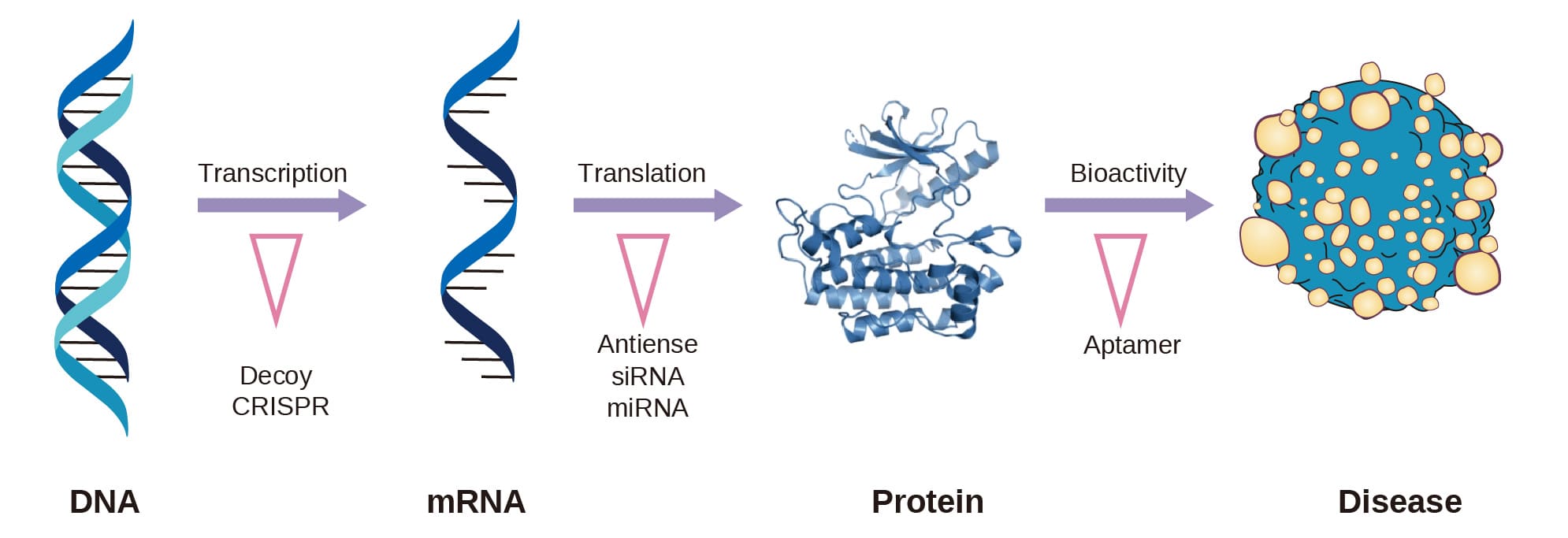
Figure 3. Schematic of oligonucleotide therapeutics acting on different stages of pathological gene expression to ameliorate disease pathogenesis and progression. Adapted from reference[5]
Advantages of Oligonucleotide Therapeutics Development
Oligonucleotide therapeutics represent an emerging field of global interest due to their advantages of accelerated development timelines, lower production costs compared to biologics, and a high success rate in research and development.
Accelerated Development Timelines
Oligonucleotide therapeutics are designed based on the principle of base complementarity, where the majority of nucleic acid drugs rely on the pairing of bases. Therefore, designing drugs based on the target gene's base sequence is relatively simple. The design of chemical modifications and delivery systems is independent of sequence design. Multiple nucleic acid sequence design software tools are available for analyzing various parameters, including sequence conservation, homology, immunogenicity, and off-target effects. These software tools enable rapid cross-species sequence alignment and homology analysis, allowing for the selection of oligonucleotide sequences with high specificity and potential activity.
Cost-Effective Manufacturing Compared to Biologics
Oligonucleotides are chemically synthesized and can be scaled up to industrial levels, resulting in lower production costs compared to biological molecules. The current technology for oligonucleotide synthesis is well-established and supports production from laboratory scale to commercial scale. These advantages significantly shorten the oligonucleotide therapeutics research and development cycle. For example, Milasen, an oligonucleotide drug developed for a single patient, took only ten months from drug design to first clinical administration.
High Success Rate in Research and Development
Oligonucleotide therapeutics have revolutionary advantages in terms of success rates in research and development. Alnylam Pharmaceuticals, a pioneer in RNA interference (RNAi) therapeutics, has successfully advanced multiple siRNA candidates through late-stage clinical development and regulatory approval. Its track record substantially exceeds the industry-average clinical development success rates reported for new therapeutics, highlighting the maturity and translational potential of the siRNA platform.
Challenges in the Pharmacokinetic (PK) Evaluation and Bioanalysis of Oligonucleotides
The nonclinical development framework for oligonucleotide therapeutics is becoming increasingly harmonized through the FDA Draft Guidance (2024), the PMDA Guideline (2020), and the emerging ICH S13. However, important DMPK challenges remain and often require a case-by-case approach. Key gaps include the evaluation of novel extra-hepatic delivery platforms, where regulatory expectations for carrier toxicity assessment and payload-carrier risk attribution remain unclear. In addition, immunotoxicity and long-term tissue accumulation continue to present scientific and regulatory uncertainties. Addressing these issues will be critical for the next generation of oligonucleotide therapeutics.
To improve nucleotide drug stability and targeting capabilities, new technologies involving the chemical oligonucleotide modification and delivery systems are constantly emerging. The chemical modifications of oligonucleotide drugs that have been developed include modification of the nucleic acid backbone, the sugar portion of ribose, and nucleobases. Delivery systems mainly include LNP delivery systems, polymer delivery systems, conjugate delivery systems, and viral vectors[6]. Preclinical PK properties of oligonucleotides and their delivery systems should be evaluated simultaneously.
PK studies involve a variety of complex oligonucleotide bioanalysis tools. Different oligonucleotides require different bioanalytical methods. For the same oligonucleotide therapeutic, different bioanalytical methods may be required at different stages of development and for different sample types at the same stage. This means that PK analysis, particularly DMPK bioanalysis, often involves collaboration among multidisciplinary teams, using multiple technical testing platforms.
Conclusion: Advancing DMPK Bioanalysis for Oligonucleotide Therapeutics
The pharmacokinetic study of oligonucleotide therapeutics requires the establishment of a comprehensive evaluation system by combining the nature of oligonucleotides themselves, chemical modifications, and the principles and characteristics of delivery technologies[7]. We look forward to the development of more oligonucleotide therapeutics to fill the current unmet clinical needs, supported by robust strategies for the bioanalysis of oligonucleotides.
Authors: Zhiyu Li, Lili Xing
Talk to a WuXi AppTec expert today to get the support you need to achieve your drug development goals.
Committed to accelerating drug discovery and development, we offer a full range of discovery screening, preclinical development, clinical drug metabolism, and pharmacokinetic (DMPK) platforms and services. With research facilities in the United States (New Jersey) and China (Shanghai, Suzhou, Nanjing, and Nantong), 1,300+ scientists, and over fifteen years of experience in Investigational New Drug (IND) application, our DMPK team at WuXi AppTec are serving 1,700+ global clients, and have successfully supported 2,100+ IND applications.
Reference
[1] Moumné L, Marie AC, Crouvezier N. Oligonucleotide Therapeutics: From Discovery and Development to Patentability. Pharmaceutics. 2022 Jan 22;14(2):260
[2] Suzan M Hammond, et al. Delivery of oligonucleotide-based therapeutics: challenges and opportunities. EMBO Mol Med. 2021, 13(4), e13243.
[3] Anna Kilanpwska, et al. In vivo and in vitro studies of antisense oligonucleotides – a review. RSC Adv., 2020, 10, 34501-34516.
[4] Thomas C. Roberts, et al. Advances in oligonucleotide drug delivery. Nat Rev Drug Discov., 2020, 19, 673-694.
[5] Kazuki Takakura, et al. The clinical potential of oligonucleotide therapeutics against pancreatic cancer. International Journal of Molecular Sciences. 2019, 20. 3331.
[6] Roberts, T.C., Langer, R. & Wood, M.J.A. Advances in oligonucleotide drug delivery. Nat Rev Drug Discov 19, 673–694 (2020)
[7] Liang Shen, editor. Drug Metabolism and Pharmacokinetics: Frontiers, Strategies, and Applications. Wiley. 2025. http://doi.org/10.1002/9781394300150.


Related Services and Platforms


-
 DMPK BioanalysisLearn More
-
Novel Drug Modalities DMPK Enabling PlatformsLearn More
-
Novel Drug Modalities BioanalysisLearn More
-
Small Molecules BioanalysisLearn More
-
Bioanalytical Instrument PlatformLearn More
-
PROTAC DMPK ServicesLearn More
-
ADC DMPK ServicesLearn More
-
Antibody-Oligonucleotide Conjugate (AOC) DMPK ServicesLearn More
-
Oligo DMPK ServicesLearn More
-
PDC DMPK ServicesLearn More
-
Peptide DMPK ServicesLearn More
-
mRNA DMPK ServicesLearn More
-
Covalent Drugs DMPK ServicesLearn More
Stay Connected
Keep up with the latest news and insights.

