



Overview of Peptide Drugs: Definition, Development, Characteristics, and DMPK Research Strategies
-

Articles
-

Jun 26, 2026
What Are Peptides
Peptides are compounds formed by linking α-amino acids together through peptide bonds. Those composed of 2 to 20 amino acids are typically classified as oligopeptides, while those composed of more amino acids are called polypeptides or peptides. Generally, peptides have a molecular weight below 10 kDa, though the boundary between peptides and proteins can sometimes blur. According to the Further Consolidated Appropriations Act of 2020 (FCA), which revised the Biologics Price Competition and Innovation Act of 2009 (BPCIA), the FDA defines a “Protein” as “Any α-Amino acid polymer with a well-defined sequence and a size greater than 40 amino acids. Such protein products are subject to biological license application (BLA)” [1]. Therefore, the regulatory requirements for small molecules can still be referred to for the development of peptide drugs comprising 40 amino acids or less.
Biological processes fundamentally rely on protein-protein interactions, and alterations in protein structure or function can potentially initiate disease onset. As structural units of proteins, peptides certainly play a pivotal role in disease treatment.
Nature Reviews Drug Discovery published a peptide review article "Trends in peptide drug discovery" [2]. The research history and trend of peptide drugs were introduced (Figure 1). In 1922, F.G. Banting and C.H. Best extracted insulin from the bovine pancreas, marking it as the first peptide drug. This revolutionized the treatment of type 1 diabetes and heralded the beginning of peptide drug development. In 1954, Vincent du Vigneaud's team achieved the first chemical synthesis of peptides, published "The total synthesis of Oxytocin and Vasopressin" and won the Nobel Prize in Chemistry in 1955. The next leap was Bruce Merrifield's idea of assembling amino acids on the solid phase to automatically synthesize peptides, which led to the invention of solid phase peptide synthesis (SPPS) in 1963 and won the Nobel Prize in Chemistry in 1984. The advent of recombinant technology in the 1980s made it possible for the clean production of peptides with greater molecular weights.
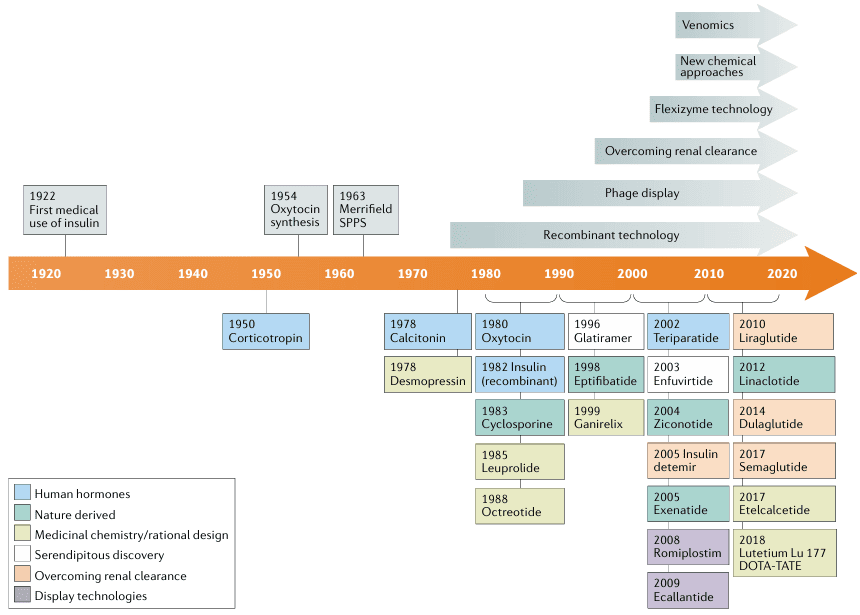
Figure 1 Development and milestones of peptide drugs [2]
However, compared with small molecule drugs, inherent limitations of peptides such as low oral bioavailability, poor plasma and metabolic stability, and short circulation time were also exposed. In addition, for pharmaceutical companies, the high cost associated with peptide production led to a stagnant period in the development of peptide drugs during the 1970s and 1980s.
Until the late 1980s, it was found that peptides can be used as selective probes of subtype receptors, as well as their enduring presence as lead compounds, laying the foundation for a second wave of peptide drug development, while drawing the attention of venture capital and biotechnology companies. Since then, drug delivery technologies, formulations, and synthesis methods have also made great progress, which has laid a considerable prospect in the peptide drug market.
After the milestones of the peptide research, the average annual growth rate of approved peptide drugs was about 7.7% from 1959 to 2019, and more than 100 peptide drugs have been marketed by 2026. These drugs were mostly agonists and were used for the treatment of a variety of diseases, including diabetes, cancer, osteoporosis, multiple sclerosis, AIDS (acquired immune deficiency syndrome), and chronic pain. In 2019, peptide drugs accounted for 5% of the $1.2 trillion drug market, and the $25 billion sales of insulin and its analogues accounted for approximately 50% of the peptide drug market.
The peptide pipeline that entered clinical research doubled from 2000 to 2010, with more than 150 peptides in clinical research and 400 to 600 peptide compounds in preclinical research. Peptide drugs have emerged as one of the areas with the most substantial market potential in the pharmaceutical industry.
Characteristics and Advantages of Peptide Drugs
Peptide drugs combine the benefits of both small molecule and protein drugs. Small molecules have small binding surfaces, low activity, and poor specificity to target proteins, which often lead to toxic side effects. Peptides exhibit strong affinity to targets, high specificity, and few side effects [3]. Compared to macromolecular drugs, peptide drugs offer distinct advantages such as low immunogenicity and low production cost. However, peptide drug development faces challenges such as low permeability, poor stability, and low oral bioavailability. A comparison of the advantages and disadvantages of various drugs refers to Table 1 [4].
Table 1 Comparison of advantages and disadvantages of various drugs [5]
Advantages | Disadvantages | |
Small molecule | High oral bioavailability Metabolically stable Numerous targets Small size | High toxicity Many side effects Potential low solubility Poor selectivity |
Peptide | High activity High selectivity Broad targets Low toxicity Low tissue accumulation High chemical and biological diversity | Poor metabolic stability Low membrane permeability Low oral bioavailability Fast clearance Sometimes low solubility |
Macromolecule | High activity High selectivity Low toxicity Low tissue accumulation High chemical and biological diversity Difficult for biosimilar | Poor membrane permeability Poor oral bioavailability The target is mainly extracellular High cost of manufacturing |
DMPK Properties of Peptides
Absorption of Peptide Drugs
The main modes of peptide absorption are convection of fluid, passive diffusion, and receptor-mediated active transport. Except for oligopeptides or small peptides, peptides typically have molecular weights greater than 1000 Da and are more polar, so the passive diffusion rate is slower than that of smaller molecules. Peptides with larger molecular weights (5000 to 12000 Da) are mainly absorbed and transported through the lymph circulation. Due to the slow lymph circulation, the time for the drug to reach peak concentration will be significantly extended. The flip-flop phenomenon can also occur in vivo due to absorption retardation (when the absorption constant is much smaller than the elimination constant), resulting in a longer half-life and pharmacodynamic effect [6]. For instance, with the gonadotropin-releasing hormone (GnRH) agonist leuprorelin, the monthly long-acting intramuscular injection gradually releases the drug into the systemic circulation to inhibit follicle-stimulating hormone (FSH) and luteinizing hormone (LH) secretion in the long term for the treatment of prostate cancer and endometriosis.
Orally administered peptide drugs encounter the mucus layer of the gastrointestinal tract, which secretes certain mucinous proteins that, through intermolecular interactions and disulfide bonds, impede the diffusion of peptide drugs to cells. Kovalainen et al reported that the penetration of intestinal epithelial cells is restricted to molecules with a molecular weight of no more than 3500 Da [7]. Therefore, poor gastrointestinal absorption has become a challenging aspect in the development of oral peptide drugs, and the following methods are often adopted to enhance the absorption of peptides.
Identify the appropriate absorption site based on drug characteristics such as acidity/alkalinity, molecular weight, and LogP, and take corresponding formulation strategies to extend the residence time at the absorption site.
Evaluate suitable absorption enhancers (e.g., surfactants, bile salts, phospholipids, fatty acids, glycerides, etc.) to increase the permeability across the gastrointestinal tract. In addition, sodium caprate (C10, also known as decanoic acid) and sodium N- [8- (2-hydroxybenzoyl) amino] octanoate (SNAC, salcaprozate sodium) are also commonly used penetration enhancers.
Utilize bio-adhesive formulations, such as Polycarbophil, to enhance the absorption of peptides in the mucus layer.
Distribution of Peptide Drugs
Human serum albumin (HSA) has a strong binding affinity to peptides, and due to its high physiological concentration, it has a great impact on the distribution of peptides. Peptides have weak lipophilicity and low permeability, and it is difficult to directly cross the cell membrane into cells. It primarily uses endocytosis to enter cells, including pinocytosis or phagocytosis, and occasionally binds to certain cell membrane surface receptors for cell entry. Given the volume of distribution (Vd) values of peptides are typically small and generally do not exceed the volume of extracellular fluid, utilizing various nanocarrier systems including liposomes, polymers, protein complexes, and inorganic materials, etc., is considered a more effective strategy to enhance the intracellular delivery and targeting of peptides.
There also exists a specialized peptide, the cell-penetrating peptide (CPP), which is a class of short peptides that can carry molecules or proteins across membrane permeation, derived mainly from viral peptide sequences, non-viral proteins, or smaller molecules. Its ability to penetrate membranes is independent of classical endocytosis and can directly cross the cell membrane into cells.
Metabolism of Peptide Drugs
Peptides are mainly degraded by proteases or peptidases. Proteases are widely distributed in the body, including liver, kidney, and gastrointestinal tissues, lungs, blood and vascular endothelium, skin, and other tissues and organs. Proteases are divided into endopeptidases and exopeptidases (including aminopeptidases and carboxypeptidases) [8]. The hydrolysis of peptides and proteins typically begins with endopeptidases, which act on the inner part of the protein, and oligopeptides produced by enzymatic hydrolysis can be further degraded by exopeptidases. Prodrugs or metabolites of some peptides can also be metabolized by the well-known CYP450. Proteases involved in peptide metabolism and their metabolic sites are summarized in Table 2.
Table 2 Proteases and Metabolic Sites
Protease | Metabolic site |
Pepsin | Peptide bonds formed by amino groups of aromatic amino acids and carboxyl groups of acidic amino acids |
Trypsin | Peptide bonds formed by carboxyl groups of basic amino acids |
Chymotrypsin | Hydrolysis of aromatic amino acids |
Elastase | Peptide bonds formed by carboxyl groups of aliphatic amino acids |
Aminopeptidase | Amino-terminal of oligopeptide |
Carboxypeptidase A, carboxypeptidase B | Carboxy-terminal of neutral and basic amino acids |
Dipeptidyl peptidase IV (DPPIV) | the degradation of Ala or Pro as the second amino acid residue at the N-terminus |
In addition to direct metabolism by proteases in plasma, gastrointestinal tract, etc., endocytic elimination and target-mediated elimination (TMDD) (Table 3) are also the main route of elimination of peptides [9].
Table 3 Endocytic Elimination and Target-Mediated Elimination Pathways
Endocytic elimination | Target-Mediated Elimination (TMDD) |
Peptides with relatively larger molecular weight (e.g., insulin, etc.) are endocytosed into cells and then degraded by lysosomes. Small peptides with molecular weights < 500 endocytose through the membrane into cells and are first localized in the endosome and then eliminated by the endosome-lysosome pathway. | It specifically binds to the target/antigen on the cell surface and is eliminated by internalization. Common peptide drugs such as GLP-1 receptor agonists bind to the GPCRs of the target cell, and nonlinear elimination of drugs occurs when the drug concentration saturates the receptor. |
To improve the stability of peptide compounds, optimization can be carried out in the following aspects [10]:
N-terminal or C-terminal modifications, such as methylation, and N-terminal acetylation. The half-life of glucose-dependent insulinotropic polypeptide (GIP) (1-42) is very short only ranging from 2 ~ 5 min. Mabilleau etc. Developed an enzymatically stabilized GIP analog by acetylating Tyr1 in GIP (N-AcGIP), resulting in a circulating half-life exceeding 24 h.
Replacing natural amino acids with D-amino acids and artificial amino acids to reduce affinity to proteases.
Implementing cyclization or bicyclization of peptides to improve compound rigidity.
Increasing molecular weight, such as the addition of aliphatic chains, and pegylation.
The addition of specific ligands to improve binding to albumin can effectively extend the half-life of peptide drugs.
Excretion of Peptide Drugs
Glomerular pores are approximately 8 nm in size. It is generally believed molecules with a molecular weight smaller than 50 kDa can be eliminated by renal filtration [11]. The smaller the peptide molecule, the greater the renal clearance. The filtration rate is decreased with renal impairment, which may lead to increased drug concentration and half-life in the body.
Larger peptides filtered by the glomerulus are eliminated by endocytosis and lysosomal degradation and finally hydrolyzed into small peptide fragments and amino acids. Smaller peptides filtered through the glomerulus are hydrolyzed to amino acids by exopeptidases in the brush border membrane of the tubular lumen, and then reabsorbed into the systemic circulation by specific amino acid transport systems, or they are first broken into small peptides and then transported into the proximal tubular epithelial cells and hydrolyzed intracellularly. The differences in DMPK properties between peptides and other types of drugs are summarized in Table 4.
Table 4 DMPK property differences between peptides and other types of drugs
| Traditional Chemical Drugs | Unmodified peptides | Monoclonal antibody | Antibody-drug conjugate |
Molecular weight | Generally, not greater than 1 kDa | 1 to 10 kDa | ~ 150 kDa | ~ 150 kDa |
Biological activity and specificity | Low | High | High | High |
Immunogenicity | None | None or Low | Yes | Yes |
Purity and cost | High-purity and low cost | High purity and cost | Low purity and high cost | Low purity and high cost |
Half-life | Short | Short | Long | Long |
Oral bioavailability | Acceptable | Very low | No | No |
Routes of administration | Oral typically | Intravenous, subcutaneous, intramuscular | Intravenous, subcutaneous, intramuscular | Intravenous |
DISTRIBUTION | Wide Vd range, may be transporter substrate | Vd approximates the extracellular fluid volume | Vd approximates plasma volume | ADC is similar to monoclonal antibodies, and unbound drugs are similar to small molecules |
Metabolism | Phase I and II enzyme metabolism | Peptide hydrolases, Proteases | Antibody catabolism | |
Excretion | Biliary and renal excretion | Renal excretion | Body recirculation | |
PK linearity | General linear with low dose may be nonlinear with high dose | For small molecular weights similar to chemical drugs, | General linear with high dose, nonlinear with low dose | General linear with high dose, nonlinear with low dose |
PK analyte | Parent drug and metabolites | peptides | Antibody | ADC or bound drug, total antibody, unbound drug |
ANALYTICAL METHODS | Liquid chromatography-mass spectrometry | LC-MS, radiolabel, or ELISA analysis | LC-MS, radiolabel, or ELISA analysis | LC-MS, radiolabel, or ELISA analysis |
DMPK Research Strategy for Peptide Drugs
In the screening stage, the plasma stability, plasma protein binding, liver and kidney S9/homogenate stability studies should be investigated. Soft-spot metabolite identification is helpful for structure optimization. Radiolabeling is commonly employed for excretion experiments of peptide drugs. In the IND application stage, the species differences of drugs in various metabolic systems should be fully considered, and the animal species with similar metabolic characteristics to humans should be selected; the appropriate administration route, dosage, and detection time points should be determined based on the pharmacological mechanism and metabolic characteristics, especially the potential nonlinear kinetics. Given that peptide drugs may be immunogenic, the concentration of anti-drug antibodies needs to be measured to assess potential pharmacological impacts. The components of pharmacokinetic studies on peptide drugs vary at different stages of research and development (Table 5).
Table 5 Study lists pharmacokinetics at different stages of peptide drug development [12]
Development Phase | Pharmacokinetics studies |
Screening Phase | Plasma protein binding (high albumin binding leads to low clearance) Plasma Stability Stability of simulated gastrointestinal fluid (for oral peptide drugs) Liver/intestine S9/homogenate metabolic stability Kidney S9/homogenate stability MDCK, Caco-2 permeability (for oral peptide drugs) P450 enzyme inhibition (optional) PEPT1, PEPT2 transporter substrate and inhibition Vehicle Screening, permeation enhancers evaluation In vivo PK studies |
Preclinical Candidate Phase | Metabolites identification in plasma, liver and kidney S9/homogenate Hepatocyte metabolite identification (Optional) Metabolites identification in in vivo plasma samples Dose escalation PK studies (support pilot toxicology) |
IND Phase | In vivo analytical method validation In vitro ADME assays In vivo PK in rodents and large animals (including anti-drug antibody detection) Tissue distribution and mass balance in rodents In vivo metabolite identification |
In terms of clinical data prediction, the processing of peptides across different mammals is relatively conserved. This implies that it is rather reliable to extrapolate human data based on the pharmacokinetic data obtained from animal studies. Therefore, employing allometric scaling for prediction tends to yield more accurate results. However, for peptides with a relatively small molecular weight, when hepatic metabolism is the primary clearance pathway or there are metabolic differences between species, it may be more appropriate to employ in vitro-in vivo extrapolation.
Summary
Peptide drugs, with their abundant targets, high biological activity, strong specificity, and minimal side effects, have been garnering increasing attention in recent years. Despite many challenges in peptide drug development, emerging methods such as new biosynthesis, formulations, and delivery carriers are likely to bring significant breakthroughs in the application. The combination of peptides with other types of drugs, such as peptide-drug conjugates (PDC), also holds promising prospects. Occupying a distinct niche in the pharmaceutical field, peptide drugs are poised to deliver health benefits to patients globally leveraging their unique advantages.
Authors: Jianping Sun, Yan Pan, Yu Wang, Yanfeng Liu, Jing Jin
Talk to a WuXi AppTec expert today to get the support you need to achieve your drug development goals.
Committed to accelerating drug discovery and development, we offer a full range of discovery screening, preclinical development, clinical drug metabolism, and pharmacokinetic (DMPK) platforms and services. With research facilities in the United States (New Jersey) and China (Shanghai, Suzhou, Nanjing, and Nantong), 1,000+ scientists, and over fifteen years of experience in Investigational New Drug (IND) application, our DMPK team at WuXi AppTec are serving 1,600+ global clients, and have successfully supported 1,800+ IND applications.
Reference
[1] Food and Drug Administration. ANDAs for certain highly purified synthetic peptide drug products that refer to listed drugs of rDNA origin, guidance for industry. http//www.fda.gov/regulatory-information/search-fda-guidance-documents/andas-certain-highly-purified-synthetic-peptide-drug-products-refer-listed-drugs-rdna-origin.
[2] Muttenthaler, M., King, G.F., Adams, D.J. et al. (2021). Trends in peptide drug discovery. Nature Reviews Drug Discovery 20 (4):309-325. http://doi.org/10.1038/s41573-020-00135-8.
[3] Srivastava, V. (2017). Peptide-based Drug Discovery: Challenges and New Therapeutics. The Royal Society of Chemistry http://doi.org/10.1039/9781788011532.
[4] Lau, J.L. and Dunn, M.K. (2018). Therapeutic peptides: historical perspectives, current development trends, and future directions. Bioorganic & Medicinal Chemistry 26 (10): 2700-2707.
[5] Manna, S. L., Natale, C.D., Florio, D. et al. (2018). Peptides as therapeutic agents for inflammatory-related diseases. International Journal of Molecular Sciences 19 (9): 2714.
[6] Di, L. (2015). Strategic approaches to optimizing peptide ADME properties. AAPS J 17 (1): 134–143. http://doi.org/10.1208/s12248-014-9687-3.
[7] Haibo, D. et al. (2018). Progress in the kinetic characteristics and metabolic mechanism of polypeptide drugs. Chinese Journal of Pharmacology& Toxicology 32 (3): http//doi.org/10.3867/j.issn.1000-3002.2018.03.010.
[8] Jinfeng, Y. et al. (2013). Progress in the metabolism of peptide drugs Chinese Pharmacological Bulletin 29 (7):895-899.
[9] Peletier, L.A. & Gabrielsson, J. (2012). Dynamics of target-mediated drug disposition profiles and parameter identification. Journal Of Pharmacokinetics and Pharmacodynamics 39: 429. http://doi.org/10.1007/s10928-012-9260-6.
[10] Patel, G. and Misra, A. (2011). Oral delivery of proteins and peptides: concepts and applications. In: Challenges In Delivery of Therapeutic Genomics and Proteomics (ed. A. Misra), 481-529. London: Elsevier http://doi.org/10.1016/B978-0-12-384964-9.00010-4.
[11] Datta-Mannan, A. (2019). Mechanisms influencing the pharmacokinetics and disposition of monoclonal antibodies and peptides. Drug Metabolism and Disposition 47 (10): 1100-1110. http://doi.org/10.1124/dmd.119.086488.
[12] Liang Shen, editor. Drug Metabolism and Pharmacokinetics: Frontiers, Strategies, and Applications. Wiley. 2025. http://doi.org/10.1002/9781394300150.


Related Services and Platforms


-
 Novel Drug Modalities DMPK Enabling PlatformsLearn More
-
PROTAC DMPK ServicesLearn More
-
ADC DMPK ServicesLearn More
-
Antibody-Oligonucleotide Conjugate (AOC) DMPK ServicesLearn More
-
Oligo DMPK ServicesLearn More
-
PDC DMPK ServicesLearn More
-
Peptide DMPK ServicesLearn More
-
mRNA DMPK ServicesLearn More
-
Covalent Drugs DMPK ServicesLearn More
Stay Connected
Keep up with the latest news and insights.

