



Why Surfactants Are Critical in Biologic Injectables and How to Choose Them
-

Blogs
-

Apr 29, 2026
Nearly all liquid formulations of macromolecule drugs, whether solutions, reconstituted lyophilized products, or prefilled syringes, include a surfactant. This is because, during manufacturing, storage, transport, and use, macromolecules inevitably encounter interfaces such as air–liquid interfaces (bubbles) and container–liquid interfaces (glass/plastic vial walls, stoppers). These interfaces generate interfacial tension that can promote macromolecule adsorption, unfolding, and aggregation. Surfactants protect macromolecules by forming micelles in solution and preferentially adsorbing at interfaces, creating a protective molecular layer that reduces direct macromolecule–interface contact and prevents denaturation and aggregation caused by interfacial stress [1].
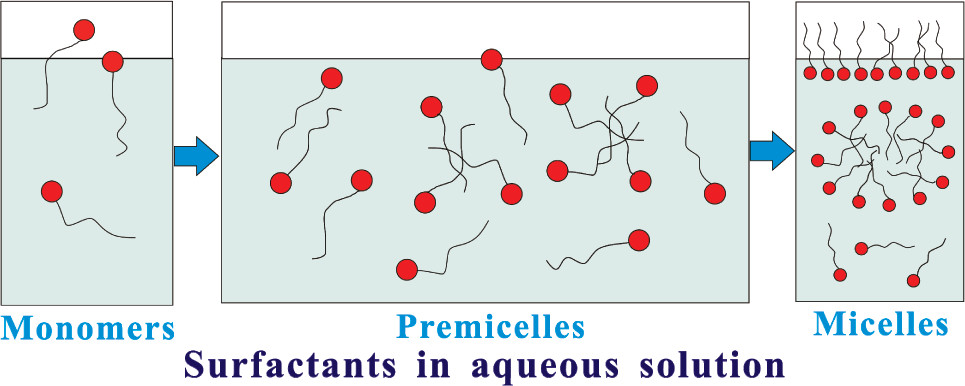
Figure 1. Mechanism of surfactant micelle formation [1]
What Is a Surfactant?
A surfactant (surface-active agent) is an amphiphilic molecule containing both a hydrophilic head group and a hydrophobic tail. This dual structure allows surfactants to reduce surface and interfacial tension [2].
Pharmaceutical surfactants are generally classified into four categories:
Non-ionic surfactants (e.g., polysorbate 20, polysorbate 80)
Anionic surfactants (e.g., sodium dodecyl sulfate, SDS)
Cationic surfactants (e.g., cetyltrimethylammonium bromide, CTAB)
Zwitterionic surfactants
Among these, non-ionic surfactants are most widely used in biologics formulations, due to their low toxicity, minimal direct interaction with macromolecules, and strong ability to mitigate interfacial stress [3].
Polysorbate: The Preferred Surfactant for Biologics
The most widely used surfactants in approved macromolecular drugs are non-ionic surfactants of the polysorbate family. Their non-ionic nature minimizes potential interactions with the charged macromolecule surface.
Polysorbate 80 (PS-80, Tween 80): The current mainstream choice, suitable for most macromolecule formulations.
Polysorbate 20 (PS-20, Tween 20): Sometimes preferred for lyophilized formulations due to its lower foaming tendency.
Although polysorbates dominate, a small number of products explore alternatives such as the polyethylene oxide–polypropylene oxide block copolymer Pluronic F68 (Poloxamer 188). This typically occurs when polysorbates present stability issues (e.g., hydrolysis or oxidation generating degradants) or compatibility limitations, making Poloxamer 188 a practical backup option.
Setting Surfactant Concentrations and Managing Risks
Typical surfactant concentrations are in the range of 0.01%–0.2% (w/v). Ideally, a concentration near or slightly above the critical micelle concentration (CMC) is sufficient for effective protection. In practice, the optimal level must be carefully tuned based on the macromolecule’s interfacial sensitivity, process conditions (e.g., filtration and filling), packaging materials and treatments (e.g., siliconization), and compatibility considerations.
A critical consideration is that surfactants themselves can have stability challenges. For example, polysorbates may hydrolyze or oxidize to produce free fatty acids, peroxides, or aldehydes. These degradants can induce oxidation or chemical modification of the macromolecules, increasing stability risk. Therefore, preclinical formulation development should address not only surfactant type and concentration, but also raw material quality, storage stability, and degradation control within the macromolecule formulation.
Conclusion
Surfactants are indispensable components in the formulation of biologic injectables, serving as the primary defense against interfacial stress and protein aggregation. By carefully selecting the appropriate surfactant type and concentration, and proactively managing raw material quality, formulators can ensure robust drug stability and efficacy throughout the product's lifecycle.
WuXi AppTec DMPK possesses extensive experience and a comprehensive suite capability for pharmacokinetic formulation optimization of macromolecular therapeutics. The platform supports early-stage vehicle screening, physicochemical characterization, and relevant in vitro and in vivo studies, thereby enabling efficient identification of developable candidates for macromolecular drugs.
Authors: Xinyue Wang, Lijin Zheng, Quanli Feng, Cheng Tang
Talk to a WuXi AppTec expert today to get the support you need to achieve your drug development goals.
Committed to accelerating drug discovery and development, we offer a full range of discovery screening, preclinical development, clinical drug metabolism, and pharmacokinetic (DMPK) platforms and services. With research facilities in the United States (New Jersey) and China (Shanghai, Suzhou, Nanjing, and Nantong), 1,000+ scientists, and over fifteen years of experience in Investigational New Drug (IND) application, our DMPK team at WuXi AppTec are serving 1,600+ global clients, and have successfully supported 1,800+ IND applications.
Reference
[1] Cui, X., Mao, S., Liu, M., Yuan, H., & Du, Y. (2008). Mechanism of surfactant micelle formation. Langmuir, 24(19), 10771-10775.
[2] Randolph, T. W., & Jones, L. S. (2002). Surfactant-protein interactions. Rational design of stable protein formulations: Theory and practice, 159-175.
[3] Kerwin, B. A. (2008). Polysorbates 20 and 80 used in the formulation of protein biotherapeutics: structure and degradation pathways. Journal of pharmaceutical sciences, 97(8), 2924-2935.


Related Services and Platforms


-
 In Vivo PharmacokineticsLearn More
-
Novel Drug Modalities DMPK Enabling PlatformsLearn More
-
Rodent PK StudyLearn More
-
Large Animal (Non-Rodent) PK StudyLearn More
-
Clinicopathological Testing Services for Laboratory AnimalsLearn More
-
High-Standard Animal Facilities and Animal WelfareLearn More
-
Preclinical Formulation ScreeningLearn More






Stay Connected
Keep up with the latest news and insights.

