



Stabilizing Agents for Injectables: Protecting Biologics from Degradation
-

Blogs
-

Apr 23, 2026
For macromolecular drugs, the active ingredient alone is rarely sufficient for long-term stability. This is where stabilizing agents play a critical role. Formulation excipients such as stabilizers are added to prevent denaturation, aggregation, and degradation caused by thermal, freeze-thaw, or mechanical stress. For a stabilizing agent for injectables, the selection should ensure safety, biocompatibility, and efficacy.
Conventional Small Molecule Stabilizing Agents
The most classic stabilizing agent categories include sugars, polyols, and salts.
Sugars (e.g., sucrose, trehalose): These are among the most established and widely used stabilizers in macromolecule formulations. In solution, they act via a “preferential hydration” mechanism—sugar molecules preferentially interact with water rather than directly with the protein surface, creating a protective hydration layer that helps maintain the native tertiary structure and reduces denaturation and aggregation driven by exposure to air–liquid or solid–liquid interfaces. In lyophilized products, sugars are especially critical: during freeze-drying, they can form an amorphous glassy matrix that embeds protein molecules, protecting them from physical stresses during freezing and dehydration (e.g., ice crystal formation and concentration effects) [1].
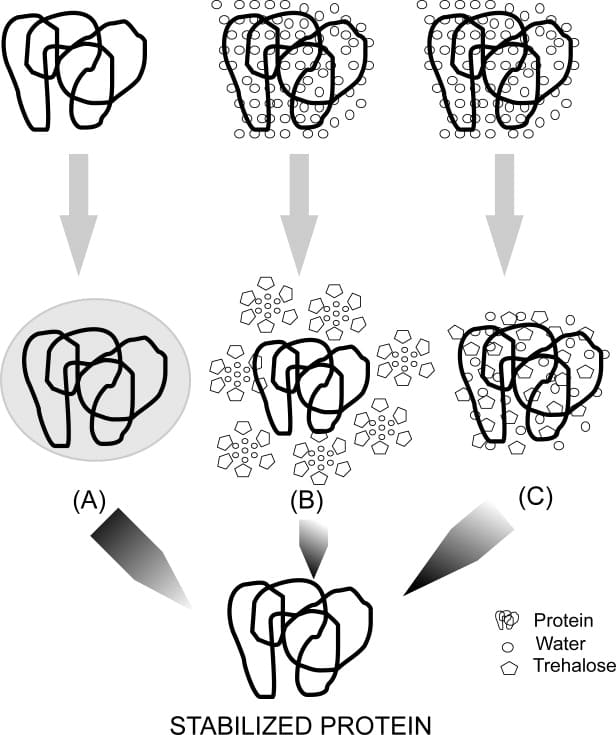
Figure 1. Multiple theories describing how sugars stabilize protein properties [1]
Polyols (e.g., mannitol, sorbitol): In addition to osmolality adjustment, polyols can provide some stabilizing benefit. However, in lyophilized products, special caution is needed: polyols (especially mannitol) can crystallize during freeze-drying. Crystallization can locally increase protein concentration, raising aggregation risk, or disrupt the protective amorphous matrix. For this reason, polyols are often used together with non-reducing sugars (e.g., sucrose, trehalose), which can inhibit crystallization and jointly support stability and desirable lyophilized cake appearance.
Inorganic salts (e.g., NaCl, KCl): Salts are primarily used to adjust ionic strength and osmolality. Appropriate ionic strength can shield electrostatic attraction or repulsion between protein molecules and thereby influence aggregation propensity. However, high salt concentrations, especially with multivalent ions, may instead promote aggregation via electrostatic screening and/or salting-out effects. Salt use, therefore, requires careful evaluation and optimization to identify a concentration that balances ionic strength with stability.
Table 1. Conventional small molecule stabilizers in macromolecule formulations
Stabilizer | Common Concentration Range |
Sucrose | 25–100 mg/mL |
Trehalose | 8–100 mg/mL |
Mannitol | 0.4–50 mg/mL |
Sorbitol | 35–50 mg/mL |
Sodium chloride | 3–9 mg/mL |
The Emerging Role of Amino Acids as Stabilizer Excipients
In recent years, amino acids have been used increasingly in formulations for antibodies and other biologics, showing substantial potential. Amino acids are naturally occurring in the body and offer high safety and good biocompatibility. Importantly, they can stabilize formulations through multiple mechanisms and often provide additional functional benefits.
Arginine: One of the most commonly used amino acid stabilizers. It can effectively reduce protein–protein interactions, thereby decreasing aggregation at high concentrations and significantly lowering solution viscosity [2]. The mechanism may involve interactions between arginine’s guanidinium group and specific regions on the protein surface, disrupting intermolecular forces that drive aggregation.
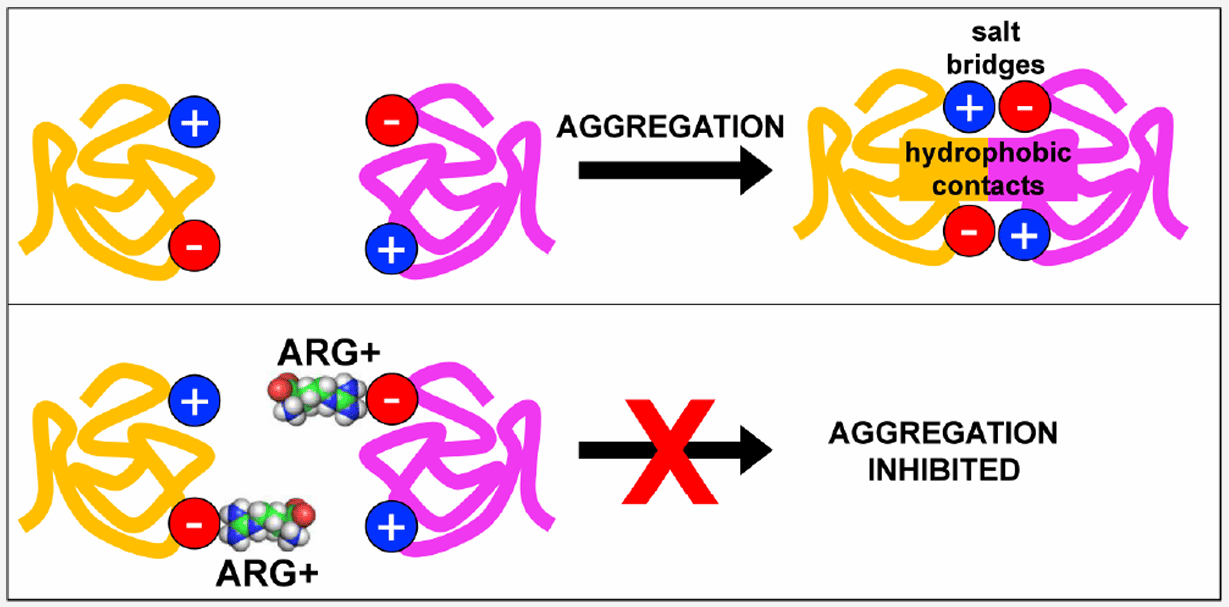
Figure 2. Proposed mechanism by which arginine inhibits protein aggregation [2]
Methionine: As a sulfur-containing amino acid, methionine is often used as an antioxidant. Because it is relatively prone to oxidation, it can act as a sacrificial scavenger that helps protect macromolecule drugs—especially proteins containing oxidation-sensitive residues such as methionine, tryptophan, and cysteine—from oxidative attack and activity loss.
Combination approaches: Formulation trends indicate that “multi–amino acid combinations” are beginning to partially replace traditional sugars or salts as the core stabilizing system. This approach offers greater flexibility and functionality, enabling synergistic protection tailored to molecule-specific stability liabilities. A representative example is the lipid-lowering drug Evkeeza (evinacumab) commercial formulation. Instead of using traditional stabilizers such as sucrose or NaCl, the formulation innovatively uses a combination of amino acids, including arginine, histidine, and proline, along with PS-80 surfactant and a pH 6 histidine buffer. This amino-acid-based excipient system supports long-term stability for a high-concentration monoclonal antibody product, highlighting the value and potential of amino-acid excipients in modern macromolecule formulations.
Table 2. Amino acid stabilizers in macromolecule formulations
Stabilizer | Common Concentration Range |
Arginine | 10–100 mM |
Glycine | 10–100 mM |
Proline | 10–200 mM |
Lysine | 1–10 mM |
Methionine | 1–10 mM |
A Final Word
Grasping the true excipient's meaning and the role of the stabilizing agent in drug formulation is crucial for protecting biologics. The strategic selection of stabilizer excipients and other pharmaceutical excipients is the key to creating robust excipients for injectables capable of withstanding manufacturing, thermal, and storage stresses.
WuXi AppTec DMPK possesses extensive experience and a comprehensive suite capability for pharmacokinetic formulation optimization of macromolecular therapeutics. The platform supports early-stage vehicle screening, physicochemical characterization, and relevant in vitro and in vivo studies, thereby enabling efficient identification of developable candidates for macromolecular drugs.
Authors: Xinyue Wang, Lijin Zheng, Quanli Feng, Cheng Tang
Talk to a WuXi AppTec expert today to get the support you need to achieve your drug development goals.
Committed to accelerating drug discovery and development, we offer a full range of discovery screening, preclinical development, clinical drug metabolism, and pharmacokinetic (DMPK) platforms and services. With research facilities in the United States (New Jersey) and China (Shanghai, Suzhou, Nanjing, and Nantong), 1,000+ scientists, and over fifteen years of experience in Investigational New Drug (IND) application, our DMPK team at WuXi AppTec are serving 1,600+ global clients, and have successfully supported 1,800+ IND applications.
Reference
[1] Jain, N. K., & Roy, I. (2009). Effect of trehalose on protein structure. Protein Science, 18(1), 24-36.
[2] Ng, Y. K., & Konermann, L. (2024). Mechanism of protein aggregation inhibition by arginine: blockage of anionic side chains favors unproductive encounter complexes. Journal of the American Chemical Society, 146(12), 8394-8406.


Related Services and Platforms







Stay Connected
Keep up with the latest news and insights.

