



What Is a Buffer Solution and Its Role in Injectable Formulations for Biologics
-

Blogs
-

Apr 17, 2026
When developing injectable macromolecular drugs, the choice of a buffer solution is a foundational decision. Solution pH directly and profoundly affects macromolecular conformational stability (tertiary and quaternary structure), aggregation propensity, and chemical degradation rates. For instance, deamidation accelerates in alkaline conditions, while cyclization can occur in acidic environments. Therefore, establishing a suitable and stable pH buffer solution is key to the success of preclinical formulations for PK studies.
What Is a Buffer Solution and Why Does It Matter in Biologics Formulation
A buffer solution is a system composed of a weak acid/base pair that resists changes in pH upon the addition of small amounts of acid or base. In the context of macromolecular drug formulations, buffers play a critical and multifaceted role beyond simple pH control, serving as a key determinant of both chemical and physical stability [1].
From a chemical stability perspective, pH directly governs degradation pathways such as deamidation, oxidation, hydrolysis, and isomerization. By maintaining a controlled pH microenvironment, buffer systems effectively minimize pH-driven degradation kinetics, thereby preserving molecular integrity during storage and administration [1].
From a physical stability standpoint, buffer selection influences macromolecule conformation, charge distribution, and intermolecular interactions. pH determines the ionization state of amino acid residues, which in turn affects electrostatic repulsion and colloidal stability. When the formulation pH approaches the macromolecule’s isoelectric point (pI), reduced net charge can lead to increased aggregation, self-association, and precipitation [1]. The final pH of the macromolecule formulation is typically selected to be within ±0.5 to 1 unit of the macromolecule’s pl to ensure adequate charge repulsion and maintain macromolecules in a soluble, native-like state [2].
Overall, buffer selection represents a foundational design element in biologics formulation, linking molecular stability with in vitro performance and in vivo outcomes.
The Shift from Phosphate Buffer Solution to Histidine
Historically, phosphate buffer solution and citrate systems were standard. However, recent trends in biological buffer solution selection show a decisive move toward histidine buffer. Analysis of FDA approved antibody formulations reveals that histidine usage has exceeded 60% since 2021 [3]. This shift highlights the superior functionality of histidine, which answers a key question: What is the function of buffer solution in novel drug modalities? Beyond pH control, histidine offers:
Optimal pH Range: Histidine buffers precisely control pH between 5.5 and 6.5, which balances conformational and colloidal stability for most monoclonal antibodies. This range often aligns with most macromolecules, minimizing charge-driven aggregation.
Multifunctionality: Unlike traditional buffers, histidine acts as a stabilizer, cryoprotectant, antioxidant, and even viscosity reducer, making it a versatile tool for simplifying formulations [4].
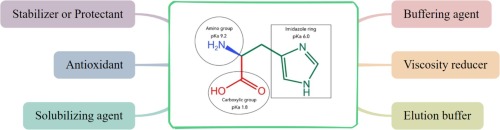
Figure 1. Histidine: a multifunctional excipient in macromolecule formulations [4]
Choosing the Right Buffer Solution for Your Molecule
While histidine is a preferred biological buffer solution, formulation development requires flexibility. For molecules like certain antibody drug conjugates (ADCs) with isoelectric points outside histidine's range, alternatives like succinate buffer may be necessary.
Table 1. Common buffer systems in macromolecule formulations
Buffer System | Common pH Range | Common Concentration Range |
Histidine | 5.5–6.5 | 10–25 mM |
Phosphate/Phosphoric acid | 6.0–8.0 | 5–50 mM |
Sodium citrate/Citric acid | 3.0–6.2 | 5–50 mM |
Sodium acetate/Acetic acid | 3.7–5.5 | 5–20 mM |
Tris/Tris-HCl | 7.0–9.0 | 5–50 mM |
Sodium succinate/Succinic acid | 4.0–6.0 | 5–25 mM |
Final Thoughts
While a traditional biological buffer solution like a phosphate buffer solution remains useful, the industry is shifting toward multifunctional options like histidine. By evaluating the effects of buffers on pH lab experiments and pH and buffer solution dynamics, formulators can select the best buffer solution to guarantee long-term clinical efficacy.
WuXi AppTec DMPK possesses extensive experience and a comprehensive suite capability for pharmacokinetic formulation optimization of macromolecular therapeutics. The platform supports early-stage vehicle screening, physicochemical characterization, and relevant in vitro and in vivo studies, thereby enabling efficient identification of developable candidates for macromolecular drugs.
Authors: Xinyue Wang, Lijin Zheng, Quanli Feng, Cheng Tang
Talk to a WuXi AppTec expert today to get the support you need to achieve your drug development goals.
Committed to accelerating drug discovery and development, we offer a full range of discovery screening, preclinical development, clinical drug metabolism, and pharmacokinetic (DMPK) platforms and services. With research facilities in the United States (New Jersey) and China (Shanghai, Suzhou, Nanjing, and Nantong), 1,000+ scientists, and over fifteen years of experience in Investigational New Drug (IND) application, our DMPK team at WuXi AppTec are serving 1,600+ global clients, and have successfully supported 1,800+ IND applications.
Reference
[1] Manning, M. C., Holcomb, R. E., Payne, R. W., Stillahn, J. M., Connolly, B. D., Katayama, D. S., ... & Crommelin, D. J. (2024). Stability of protein pharmaceuticals: recent advances. Pharmaceutical Research, 41(7), 1301-1367.
[2] Kendrick, B. S., Li, T., & Chang, B. S. (2002). Physical stabilization of proteins in aqueous solution. Rational design of stable protein formulations: Theory and practice, 61-84.
[3] Mieczkowski, C. A. (2023). The evolution of commercial antibody formulations. Journal of Pharmaceutical Sciences, 112(7), 1801-1810.
[4] Lv, J. Y., Ingle, R. G., Wu, H., Liu, C., & Fang, W. J. (2024). Histidine as a versatile excipient in the protein-based biopharmaceutical formulations. International Journal of Pharmaceutics, 662, 124472.


Related Services and Platforms






Stay Connected
Keep up with the latest news and insights.

