




In Vitro Metabolism Studies of 5 acrylamide Covalent Drugs: Comparison with Metabolism and Disposition in Human
-

Publications
-

Mar 19, 2026
◢ Drug Metab Dispos. 2026 Jan 17;54(3):100239. doi: 10.1016/j.dmd.2026.100239. Online ahead of print.
Ruixing Li 1, Qingfeng Shi 1, Mingshe Zhu 2, Weiqun Cao 3, Yi Tao 4, Liang Shen 1
1DMPK Department, WuXi AppTec, Shanghai, China.
2MassDefect Technologies, Princeton, New Jersey.
3DMPK Department, WuXi AppTec, Shanghai, China. Electronic address: cao_weiqun@wuxiapptec.com.
4DMPK Department, WuXi AppTec, Shanghai, China. Electronic address: tao_yi@wuxiapptec.com.
Abstract
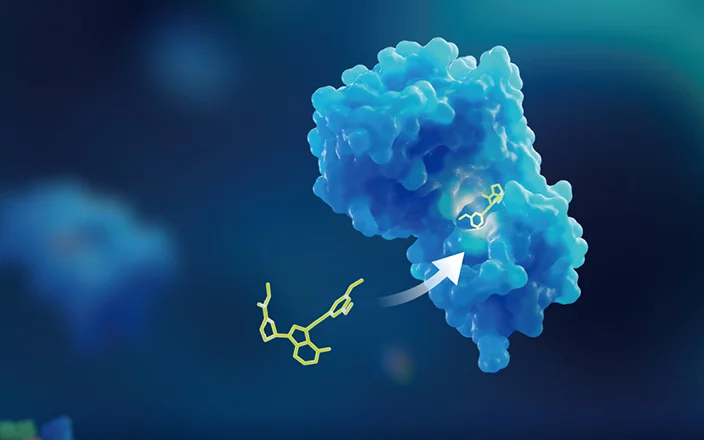
Targeted covalent inhibitors, such as acrylamide covalent drugs (ACDs), offer advantages in potency, selectivity, and duration of effect compared with traditional small-molecule inhibitors. However, ACDs undergo unique biotransformation pathways in humans, including CYP-mediated metabolism, protein covalent binding, and nonenzymatic glutathione (GSH) adduction, which make standard in vitro metabolism assays for small molecules unsuitable for characterizing ACDs. This study aimed to develop a specialized panel of in vitro metabolism experiments for characterizing ACDs. The approach included metabolism stability assays in human liver microsomes with or without NADPH, covalent binding to human serum albumin with or without GSH, and metabolite profiling in human liver microsomes with or without GSH. In vitro metabolic data were generated for 5 ACDs, abivertinib, afatinib, osimertinib, ibrutinib, and pyrotinib, and compared with reported human metabolism and disposition data. In general, in vitro biotransformation pathways determined in this study are consistent with major metabolic clearance pathways observed in humans. For example, osimertinib showed the highest nonspecific protein covalent binding, a high oxidation-to-GSH adduct ratio, and moderate NADPH-dependent metabolic rates, supporting protein covalent binding as the major metabolic pathway in humans. In contrast, afatinib exhibited minimal CYP-mediated metabolism after accounting for covalent binding to microsomal proteins, low serum protein binding, and a very low oxidation-to-GSH adduct ratio, consistent with GSH adduction being the predominant biotransformation pathway in humans. The results demonstrate that the newly developed in vitro metabolism workflow enables more accurate predictions of CYP-mediated clearance rates and clarifies the relative contributions of CYP metabolism, nonspecific protein covalent binding, and GSH adduction to overall metabolic clearance in humans. SIGNIFICANT STATEMENT: This study established a novel in vitro metabolism approach for characterizing acrylamide covalent drugs. By comparing in vitro metabolic data for abivertinib, afatinib, osimertinib, ibrutinib, and pyrotinib with reported human metabolism and disposition data, we demonstrated that this method improves the accuracy of predicting CYP-mediated metabolic rates. Furthermore, it provides clearer insights into the relative contributions of CYP metabolism, nonspecific protein covalent binding, and glutathione adduction to the overall metabolic clearance of acrylamide covalent drugs in humans.
Keywords: Acrylamide covalent drugs; GSH adduction; Human serum albumin; Liver microsomes; Metabolic stability; Metabolite profiling.
Copyright © 2026 The Author(s). Published by Elsevier Inc. All rights reserved.
PubMed Disclaimer
Conflict of interest statement
Conflict of interest The authors declare no conflicts of interest.


Related Services and Platforms


-
 MetID (Metabolite Profiling and Identification)Learn More
-
Novel Drug Modalities DMPK Enabling PlatformsLearn More
-
In Vitro MetID (Metabolite Profiling and Identification)Learn More
-
In Vivo MetID (Metabolite Profiling and Identification)Learn More
-
Metabolite Biosynthesis and Structural CharacterizationLearn More
-
Metabolites in Safety Testing (MIST)Learn More
-
PROTAC DMPK ServicesLearn More
-
ADC DMPK ServicesLearn More
-
Oligo DMPK ServicesLearn More
-
PDC DMPK ServicesLearn More
-
Peptide DMPK ServicesLearn More
-
mRNA DMPK ServicesLearn More
-
Covalent Drugs DMPK ServicesLearn More


Stay Connected
Keep up with the latest news and insights.

